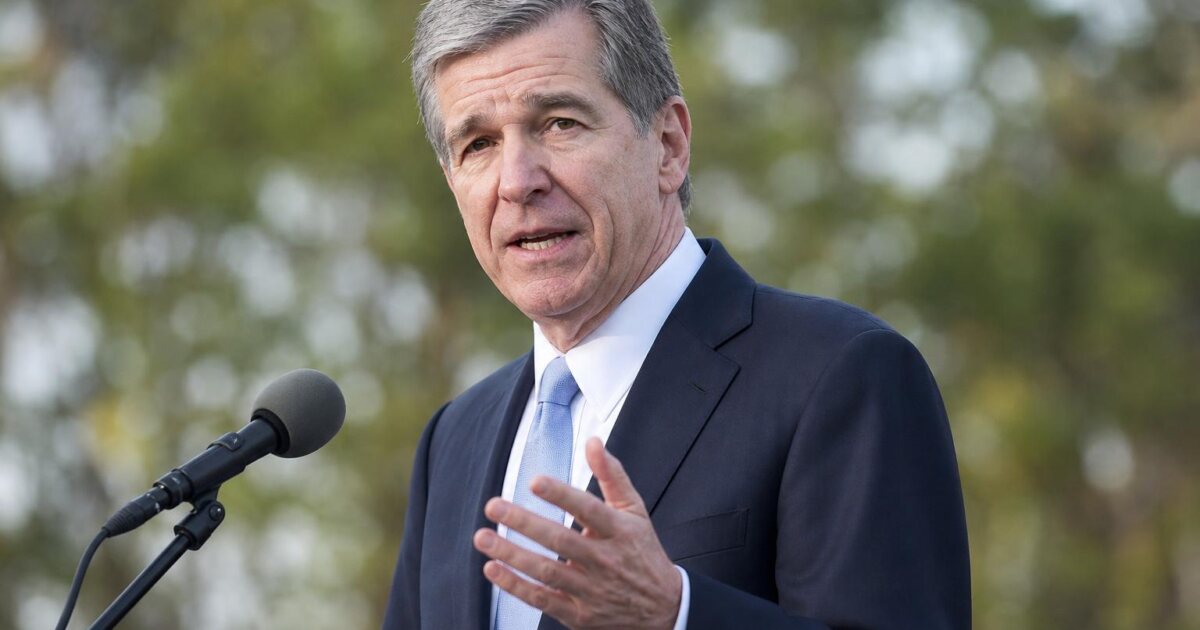
Former North Carolina Gov. Roy Cooper, the Democratic nominee for U.S. Senate in North Carolina, is under pressure after a report revealed that his administration directed more than $100 million in disaster relief funding toward affordable housing projects, even as hundreds of hurricane victims remained in temporary homes.
The findings come from an analysis by the John Locke Foundation, a free-market think tank in North Carolina, which found that the state’s Office of Recovery and Resiliency (NCORR) sent over $100 million to affordable housing while the $1 billion agency faced a significant budget shortfall. The misallocation followed two devastating storms: Hurricane Matthew in 2016 and Hurricane Florence in 2018, both of which caused widespread destruction across the state.
In other words, Roy Cooper was helping people who don’t work to get homes, instead of helping working people who just lost their homes.
Starway Village and the $9 Million Question
Among the projects that received funding was Starway Village, a 278-unit complex that cost $9 million and opened to residents earning around $45,000 a year, located approximately 12 miles from the beach. That detail alone is worth sitting with. Storm survivors were waiting in temporary housing while relief dollars built income-restricted apartments roughly a dozen miles from the shoreline. Taxpayers might reasonably ask how that qualifies as disaster recovery.
An NCORR spokesperson defended the spending to the New York Post, arguing the approach was standard practice. “HUD strongly encourages all grantees to have a varied program portfolio, while also requiring a demonstrated need before proposed funding can be approved in an action plan,” the spokesperson said. “Due to the storm impacts experienced by both homeowners and renters, housing availability is considered a key component of community recovery.” That explanation may satisfy a bureaucrat, but it is a hard sell to someone who spent months in a FEMA trailer while officials built a new apartment complex down the road.
You can read more about Roy Cooper disaster relief controversy and the full breakdown of where the money went.
Hurricane Victims Left Waiting While Cooper Looked Elsewhere
Republicans have seized on the report as Cooper campaigns for the Senate seat. The Republican National Committee also surfaced criticism that Cooper left North Carolina during hurricane preparation to attend events in New York promoting what the RNC called Biden’s “Green New Scam agenda.” Cooper has not publicly addressed that specific charge in the source reporting.
Social media reaction was swift and pointed. One user on X noted that Amish volunteers were still building homes for storm victims two years after the disaster, while another called the handling of flood victims “disqualifying” for any future office. The criticism reflects genuine frustration from North Carolinians who felt abandoned during a crisis.
What Comes Next for Cooper’s Senate Bid
Cooper is now carrying this story into a competitive Senate race, and his campaign will need a better answer than a bureaucratic statement about HUD portfolio diversity. North Carolina voters, particularly those in the communities hammered by Matthew and Florence, are paying attention.
For conservatives, this episode captures something bigger than one governor’s policy choices. When government agencies are handed billions of dollars and broad discretion, disaster relief has a way of drifting toward politically convenient priorities. The people who actually lost their homes are often the last ones served. That is not a bug in the system, it is a predictable outcome when bureaucracies answer to political interests rather than to the people they were created to help. North Carolina voters deserve a senator who remembers which crisis they were hired to solve.