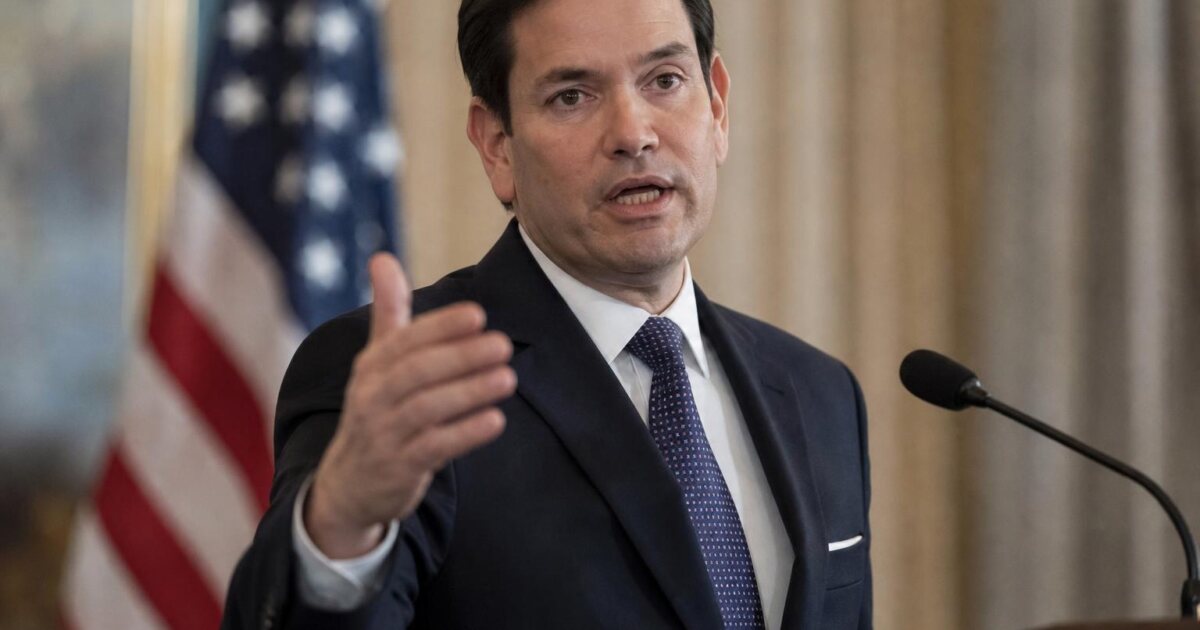
Secretary of State Marco Rubio approved the release of $320 million in military aid to Egypt on Thursday, bypassing congressionally mandated human rights restrictions on foreign military funding. The State Department justified the move by crediting Cairo with playing a key diplomatic role in the ongoing regional war with Iran.
The funds are part of Washington’s annual $1.3 billion payment to Egypt and give President Abdel Fattah el-Sisi broad latitude to purchase American-made weapons. The approval comes despite a growing list of reasons to think twice before writing Cairo a blank check.
Fresh Off War Games With America’s Biggest Rival
The timing alone raises serious questions. Egypt conducted joint air force exercises with China from August 22 to September 7, marking the first time Beijing deployed its advanced J-16 fighter jets to the African continent. Days later, Washington responded by flooding Cairo with hundreds of millions in military dollars. Analysts and regional experts are openly warning that the approval could backfire badly, as the U.S. is essentially rewarding a country that just finished playing war games with its chief global adversary. For those keeping score at home, that’s a strange way to run a foreign policy built on American interests first.
According to Egypt military aid approval, military experts are also raising alarms about Egypt’s rapid and unexplained military buildup near Israel’s border. Despite a crushed economy featuring skyrocketing inflation, a reported 30% spike in fuel prices, and a loss of $10 billion in Suez Canal revenues, Egypt has somehow assembled advanced fighter jets, heavy tanks, attack drones, and a growing Mediterranean naval force.
Bunkers on Israel’s Border and a History of Looking the Other Way
Former IDF Intelligence officer Lt. Col. Eli Dekel has warned that Egypt has quietly violated peace agreements by deploying tanks to the border and digging approximately 60 massive underground military bunkers in the Sinai, structures large enough to conceal strategic offensive weapons from airstrikes. Egyptian state media and military officials have compounded these concerns by airing videos targeting Israeli tanks and making open statements about preparing for confrontation.
Egypt’s track record is hard to ignore. For years, Egyptian authorities allowed Hamas to operate a vast tunnel network along the Philadelphi Corridor, a supply chain that funneled high-grade weapons into Gaza and helped set the stage for the October 7, 2023 massacre. The Sinai Peninsula has also served as a launching pad for jihadist violence, including the 2015 bombing of a Russian airliner that killed 224 people and a 2017 mosque attack that killed more than 300 worshippers, both carried out by an ISIS-affiliated group.
What Comes Next, and Why Americans Should Care
The $320 million flows as part of a larger annual package, meaning this is not a one-time decision but a recurring commitment. The State Department insists the aid is critical to U.S. national security, but the gap between that claim and the facts on the ground is wide enough to drive a tank through, which Egypt appears to be doing, literally, right up to its neighbor’s border.
Taxpayers might reasonably ask what exactly American dollars are buying when the recipient country is running drills with China, building offensive military infrastructure near a key U.S. ally, and letting state media threaten Israel. If this is what rewarding good diplomatic behavior looks like, the standard has been set awfully low.