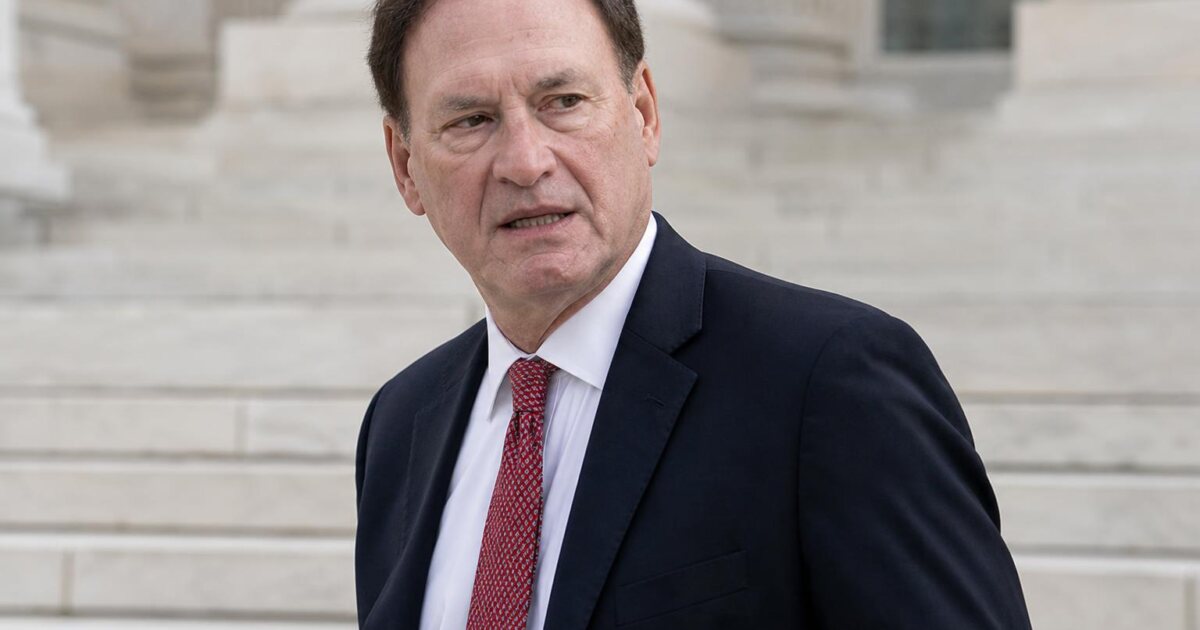
Justice Samuel Alito will not participate in one of the Supreme Court’s most consequential upcoming cases, the court announced Monday, withdrawing from a major climate change liability dispute set to be argued in just one week. The case, Suncor Energy Inc. v. County Commissioners of Boulder County, is scheduled for oral argument on Oct. 5, the opening day of the 2026-27 term.
Scott Harris, the clerk of the Supreme Court, disclosed the recusal in a brief letter to attorneys involved in the case. The letter offered no explanation, stating only that “Justice Alito has determined that he will not continue to participate.”
What the Suncor Energy Case Is About
At the center of Suncor Energy is a question with national implications: whether state-level tort claims can be used to hold oil and gas companies financially responsible for their alleged role in worsening climate change. The dispute originates with officials in the Boulder, Colorado, area, but similar lawsuits have been filed across the country, meaning the court’s ruling could reshape climate litigation nationwide.
Watchdog groups had been pressing for Alito’s removal from the case for months. In May, a coalition of left-leaning organizations urged the Senate Judiciary Committee to investigate his involvement, arguing that his “substantial holdings in individual oil and gas companies” would “undermin[e] public confidence in the impartiality of the Court.” The groups also noted that Alito had “previously recused from considering a petition brought by” the same companies now before the court in Suncor Energy, writing that “there is no apparent reason for this change in Justice Alito’s recusal practices.”
A Supreme Court spokeswoman pushed back at the time, telling NBC News that “Justice Alito does not have a financial interest in any party” and that the court’s own legal counsel had advised that “recusal is not required.” According to Alito recusal from Suncor Energy, the court’s code of conduct, adopted in November 2023, requires recusal whenever a justice’s impartiality “might reasonably be questioned,” including when the justice holds a financial interest in the subject matter or a party to the proceeding.
A Pattern of Late Recusals in Oil-Linked Cases
Justices are not obligated to explain recusal decisions, though they sometimes do when the reason involves prior judicial service. Monday’s bare-bones letter stands out, however, given what happened in a comparable situation earlier this year.
In January, less than a week before oral argument in Chevron USA Inc. v. Plaquemines Parish, Louisiana, another case tied to oil and gas companies, Harris issued a far more detailed notice. That letter identified Alito’s “financial interest in ConocoPhillips, the parent corporation for Burlington Resources Oil and Gas Company” as the reason for his withdrawal, and explained that Alito had initially stayed on the case after Burlington was dismissed as a petitioner, only to step aside when later briefing revealed that Burlington remained a party in the district court.
With Alito out, the court will hear Suncor Energy with eight justices on Oct. 5. A 4-4 tie would leave lower court rulings in place, though the court could also schedule a rehearing. No statement from Alito or further explanation from the court is expected before argument day.