On Tuesday, President Donald Trump unloaded on former President Joe Biden over Biden’s legal effort to block the release of interview recordings tied to his conversations with ghostwriter Mark Zwonitzer.
The tapes, obtained during Special Counsel Robert Hur’s investigation into classified documents, have become a political flashpoint.
Critics believe they could further expose Biden’s memory problems and raise new questions about transparency during his presidency.
Trump took to his Truth Social platform to rip Biden: “A Crooked Politician!”

— Rapid Response 47 (@RapidResponse47) May 27, 2026
President Donald Trump lashed out at former President Joe Biden late Tuesday after his predecessor sued the Justice Department to block the release of audio recordings and transcripts tied to the special counsel investigation into his handling of classified documents.
“A Crooked Politician!!!” Trump wrote on Truth Social while sharing a Just the News article about Biden’s lawsuit against the DOJ.
Biden sued the Justice Department on Tuesday in an effort to block the release of audio recordings and transcripts of the former president’s interview with ghostwriter Mark Zwonitzer that were obtained by special counsel Robert Hur during his classified documents investigation.
The legal argument being made by Biden’s legal team appears to center around a claim that these are personal documents:
Biden’s lawyers said in the lawsuit that the Justice Department plans to release the files to Congress and the conservative Heritage Foundation after previously arguing that they were exempt from disclosure under federal public records law.
According to the filing, Biden’s attorneys argued that disclosure would “constitute an unwarranted invasion of President Biden’s privacy.”
That said, the files were part of a government special counsel probe.
The Presidential Records Act (44 U.S.C. §§ 2201–2209) defines “personal records” this way:
(3) The term “personal records” means all documentary materials, or any reasonably segregable portion therof,2 of a purely private or nonpublic character which do not relate to or have an effect upon the carrying out of the constitutional, statutory, or other official or ceremonial duties of the President. Such term includes—
(A) diaries, journals, or other personal notes serving as the functional equivalent of a diary or journal which are not prepared or utilized for, or circulated or communicated in the course of, transacting Government business;
(B) materials relating to private political associations, and having no relation to or direct effect upon the carrying out of constitutional, statutory, or other official or ceremonial duties of the President; and
(C) materials relating exclusively to the President’s own election to the office of the Presidency; and materials directly relating to the election of a particular individual or individuals to Federal, State, or local office, which have no relation to or direct effect upon the carrying out of constitutional, statutory, or other official or ceremonial duties of the President.
Under the law as currently written, those definitions would appear to cover the interview recordings, and the fact that the tapes were obtained during a special counsel investigation does not automatically transform them into public records subject to immediate release.
There is certainly an argument — especially in cases involving a sitting or former president — that very little can truly be considered “personal” given the public interest surrounding presidential conduct and decision-making. But legally speaking, the existing framework governing presidential and personal records may still provide Biden with at least some basis for trying to keep the recordings shielded from disclosure.
Of course, the bigger political question hanging over all of this is whether the audio recordings further expose concerns about Joe Biden’s mental sharpness during his time in office.
That issue has hovered over Biden’s presidency for years, fueled by verbal stumbles, confusion during public appearances, and repeated moments critics argued raised serious concerns about his fitness for office.
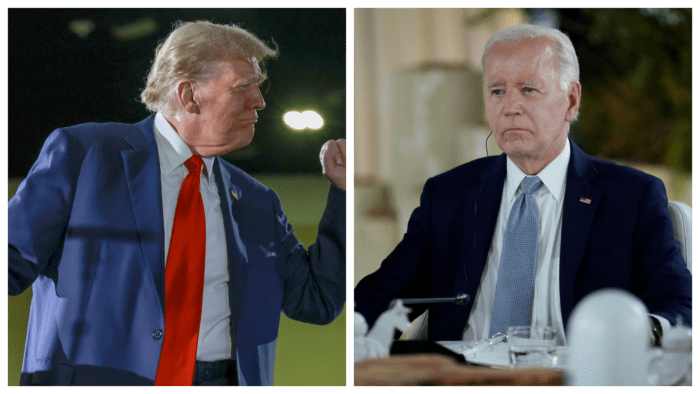
To many Americans, the defining moment came during Biden’s disastrous 2024 debate performance against then-candidate and former President Trump.
Biden’s legal team has been fighting to keep these docs private since he left office:
Biden has separately fought the release of audio from his interview with Hur. The House in 2024 voted to hold then-Attorney General Merrick Garland in contempt of Congress for refusing to turn over that audio after the White House asserted executive privilege.
Transcripts of Biden’s interviews with federal prosecutors were released last year. While Biden insisted he treated classified information seriously, the transcripts showed he was at times fuzzy about dates and details and said he was unfamiliar with the paper trail for some of the sensitive documents he handled.
A sitting president ‘fuzzy about details.’ Yikes.
It remains unclear how the latest lawsuit will ultimately play out, though the Presidential Records Act appears to provide broad legal protections that could shield at least some of the materials from public release.
But for critics, the larger issue goes far beyond a records dispute.
The real concern, they argue, is the possibility that the president of the United States — the individual entrusted with nuclear launch authority, command of the world’s most powerful military, and leadership of the free world — may have been suffering from significant mental and physical decline while still occupying the Oval Office.