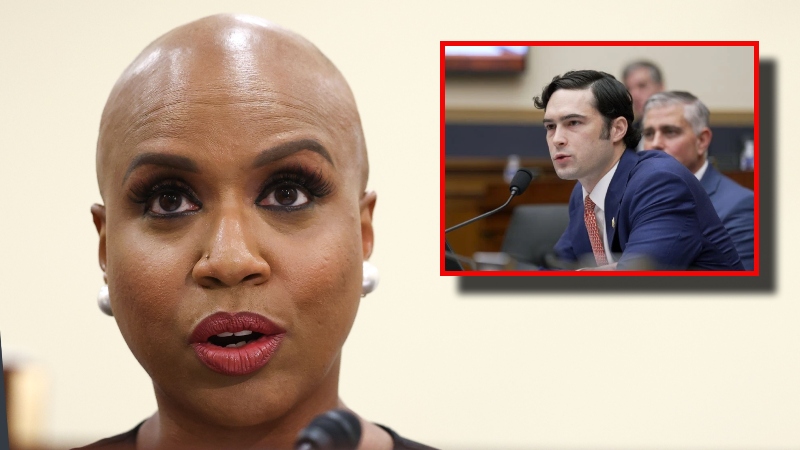
Mass. Rep. Ayanna Pressley spoke at a Democratic policy town hall this week, ahead of leadership elections, and announced her priority for the new majority.
Her words: it’s been 40 years since H.R. 40 was introduced, and it’s high time for a floor vote. There is momentum around the country for reparations, she said, to begin the process of reparative justice for Black America. She added that black voters, especially black women, delivered this historic Democratic majority, and it’s time Democrats delivered for Black America. Reparations now.
Momentum? For a bill that has sat in a drawer for four decades under Democratic majorities, Democratic presidents, and the most progressive House caucus in American history, and has never once received a floor vote because every leader who’s ever held the gavel could count?
Set aside the politics for a second and look at the arithmetic, because the arithmetic is the whole joke.

The reparations frameworks under discussion run to roughly $14 trillion. Americans just lived through what happens when Washington pushes several trillion in new spending into an economy: inflation peaked around 9 percent, and cumulative prices ran more than 20 percent above pre-pandemic levels. The groceries never came back down. That accumulated pain is a significant part of why voters were furious this cycle in the first place.
Now multiply that package several times over.
A $14 trillion wealth transfer to ‘pay for’ an institution that has been banned for 150 years at a cost of half the country and 700,000 American lives would produce exactly the thing voters said they could not tolerate — high single-digit or double-digit inflation, prices potentially climbing 40 percent — and it would hit hardest the households with the thinnest margins. Including, it must be said, the Black working-class families Pressley says she’s delivering for. A check that arrives in a currency worth substantially less is not reparative. It’s a transfer from the future to the present with a surcharge.
And remember what this election was supposedly about. Affordability. That was the word on every Democratic mailer in every swing district in America. Gas, groceries, rent. Massachusetts Democratic Rep. Jake Auchincloss stood up in Denver last weekend and begged his own party to accept that supply and demand is a fact of reality and that voters were clear about making life less expensive.
Three days later, his colleague announced that the country has momentum for a fourteen-trillion-dollar outlay.
Nobody voted for this. Nobody who flipped a seat in Michigan or Pennsylvania or Ohio was asked on a doorstep whether they supported reparations, because the answer would have cost the candidate the race. The voters who handed Democrats this majority were, by the party’s own account, angry about the cost of living. Pressley’s response to that anger is to focus on the one policy that is the last thing on the list of concerns that motivated voters during the midterms.
Even sympathetic lefties are wincing. One prominent left-wing commentator said he has the utmost respect for Pressley but cannot think of a more performative waste of time and capital, that there is no momentum, and that House Democrats would do well to focus on other matters.
He’s right, and it won’t matter. Pressley was floated for Speaker. The Bloc is extracting conditions from Jeffries. Meanwhile, Pete Buttigieg is out promoting a national wealth tax.
Republicans spent two weeks wondering how they find their way back. The answer appears to be: Just wait.