The Justice Department has launched an extraordinary legal challenge involving Alaska’s closely watched Senate race, asking a federal court to prevent the state from certifying certain election results if Republican Sen. Dan Sullivan narrowly loses amid concerns that another candidate with nearly the same name could confuse voters.
President Donald Trump confirmed Friday that he personally directed the Justice Department to pursue the case, telling reporters, “I’m the one that said do it,” as the administration argues federal intervention may be necessary to protect the integrity of the November 3 election.
The lawsuit, filed Thursday in federal court in Alaska, centers on Daniel J. Sullivan, a retired teacher from Petersburg who is running against incumbent Republican Sen. Dan S. Sullivan and Democratic former Rep. Mary Peltola.
Federal prosecutors contend Daniel J. Sullivan’s candidacy creates a substantial risk that voters intending to support the Republican senator will mistakenly vote for the similarly named challenger. The Justice Department argues that Alaska should be barred from certifying a result if Sen. Sullivan loses and the number of votes received by Daniel J. Sullivan could have changed the outcome under the state’s ranked-choice voting system.

“The United States accordingly brings this lawsuit to protect the integrity of the 2026 Senate election in Alaska,” the government said in its complaint. Specifically, prosecutors want certification delayed if Sullivan loses under circumstances in which reallocating votes cast for Daniel J. Sullivan to the incumbent could have produced a Sullivan victory.
The government is seeking time for an investigation into whether ballots cast for Daniel J. Sullivan were actually intended for the sitting senator, although the complaint does not spell out precisely how investigators could determine individual voters’ intentions while maintaining ballot secrecy.
Republicans have argued for months that Daniel J. Sullivan entered the race primarily to confuse voters and siphon support away from the incumbent, potentially helping Peltola capture the seat. Daniel J. Sullivan has denied being a Democratic plant and maintains that he decided independently to run for office.
Alaska election officials previously removed Daniel J. Sullivan from the ballot, but state courts reversed that decision, and the Alaska Supreme Court ultimately allowed him to remain a candidate. The ballot distinguishes between the candidates, identifying the incumbent as the Republican senator while Daniel J. Sullivan appears without a party designation, and Alaska’s ranked-choice system permits voters to rank multiple candidates.
Under ranked-choice voting, voters rank candidates in order of preference, with lower-performing candidates eliminated through successive rounds and their votes redistributed until one candidate receives a majority.
The unusual dispute has taken on national significance because the Alaska contest between Sullivan and Peltola is considered highly competitive and could factor into which party controls the Senate next year. Trump has repeatedly complained about the second Sullivan’s presence on the ballot, raising the issue during an Alaska rally earlier this month and calling the situation “CHEATING” in a social-media post.
The Justice Department said Friday that Alaska election officials themselves had previously concluded that Daniel J. Sullivan’s campaign was designed to mislead voters, although state courts rejected the effort to remove him.
“The Justice Department, consistent with the National Voter Registration Act enacted by Congress, is taking the necessary steps to ensure that this frivolous candidacy does not undermine the integrity of Alaska’s election or the will of its voters,” the department said.
Peltola’s campaign has sharply criticized the federal intervention, because of course, while election-law experts have questioned whether the National Voter Registration Act gives the Justice Department authority to stop Alaska from certifying the race under the circumstances described in the lawsuit.
Notre Dame election-law professor Derek Muller told the Associated Press that the case appeared unlikely to succeed because, in his view, the statute cited by prosecutors does not authorize the Justice Department to enjoin certification.
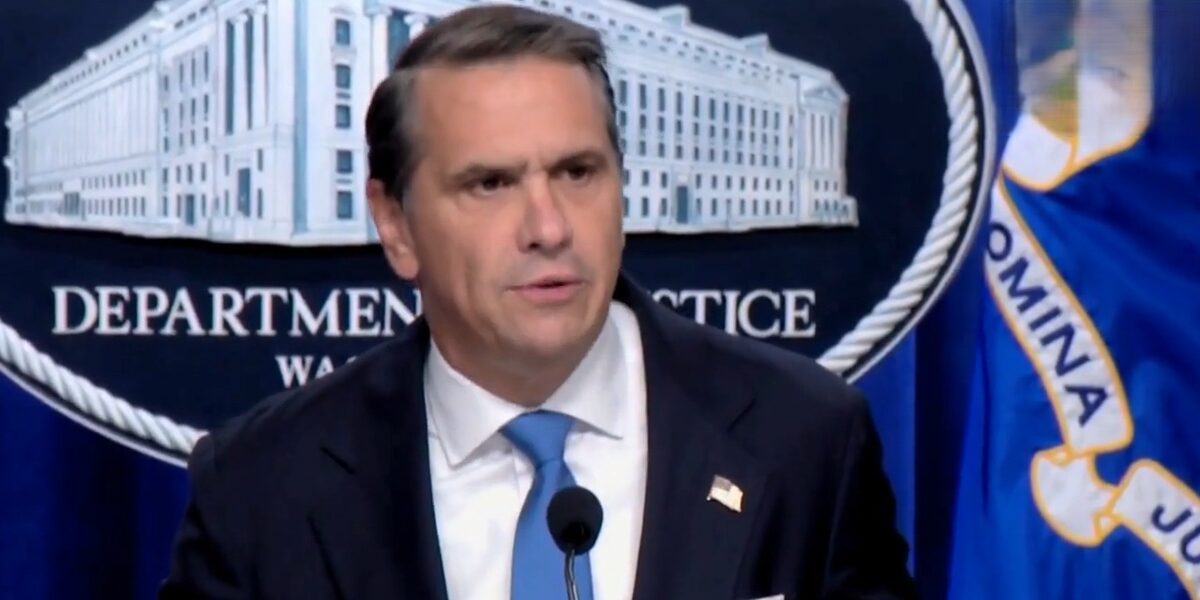
Attorney General Todd Blanche said Thursday that the department does not intend to improperly interfere with elections or state certification processes, while leaving open the possibility of federal action under extraordinary circumstances.
The case was filed just 11 days before Election Day and before any ballots have produced a winner, making the Justice Department’s move a preemptive attempt to establish a legal remedy should the disputed candidacy prove decisive.