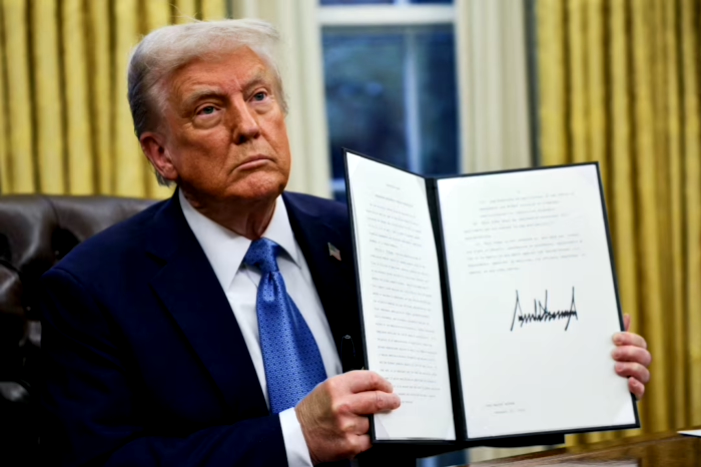
On Monday the Transportation Department finalizes a rule cutting the federal fuel economy target for cars and light trucks to 34.5 miles per gallon by model year 2031. The Biden administration had set it at 50.4. That’s the whole news, and the reaction from the usual quarters is that the government has gutted a landmark environmental achievement.
What it actually gutted was a purchase order the government wrote on your behalf without asking.
Understand how CAFE standards work, because the mechanism is the sleight of hand. Washington doesn’t tell you what car to buy. It tells manufacturers what average they must hit across everything they sell, at a level no fleet of gasoline vehicles can reach. The math only closes if a large share of the fleet is electric. So the automaker’s problem becomes moving EVs whether or not anyone wants them — which means pricing them below cost and loading the difference onto the trucks and sedans that customers actually came in for. A mandate on consumers, laundered through a regulation on producers. The family buying a used-market F-150 never knew they were subsidizing anything.
— Rapid Response 47 (@RapidResponse47) September 26, 2026
And the demand never showed up. Ford reported EV sales down 40 percent this summer. Dealers have been sitting on inventory. The charging network that was supposed to make all of this workable has been a debacle even in states that wanted it most, with billions appropriated and a fraction of the promised stations actually operating. Blue-state officials have spent the past year discovering that you can’t will infrastructure into existence with a press release.
Then there’s the environmental claim itself, which deserves more scrutiny than it gets. Reporters keep describing electric cars as nonpolluting. The batteries come from nickel, cobalt, and lithium, dug out of the ground in places like Indonesia and the Congo under conditions that would close a mine in Kentucky by lunchtime. Moving emissions offshore and calling it zero is an accounting trick, not a policy achievement.
The rollback also lands at the right moment on price. Fuel regulation is a stacked system — the Renewable Fuel Standard alone is estimated to add several hundred dollars a year to what a typical family of four spends on gasoline. Add the compliance costs baked into sticker prices and you get the situation Americans have been living with: new cars priced out of reach for the working families the mandate’s authors claimed to represent.
None of this means electric vehicles are bad. Plenty of people love theirs, and in a market without mandates they’ll keep selling to the people they suit. That’s the point. Conservatives aren’t arguing for gasoline over electricity. They’re arguing that the technology should win customers rather than have them assigned by regulation.
Let the manufacturers build what people will buy. If EVs are the future, they’ll get there on their merits, and nobody will need a federal rule to force it.