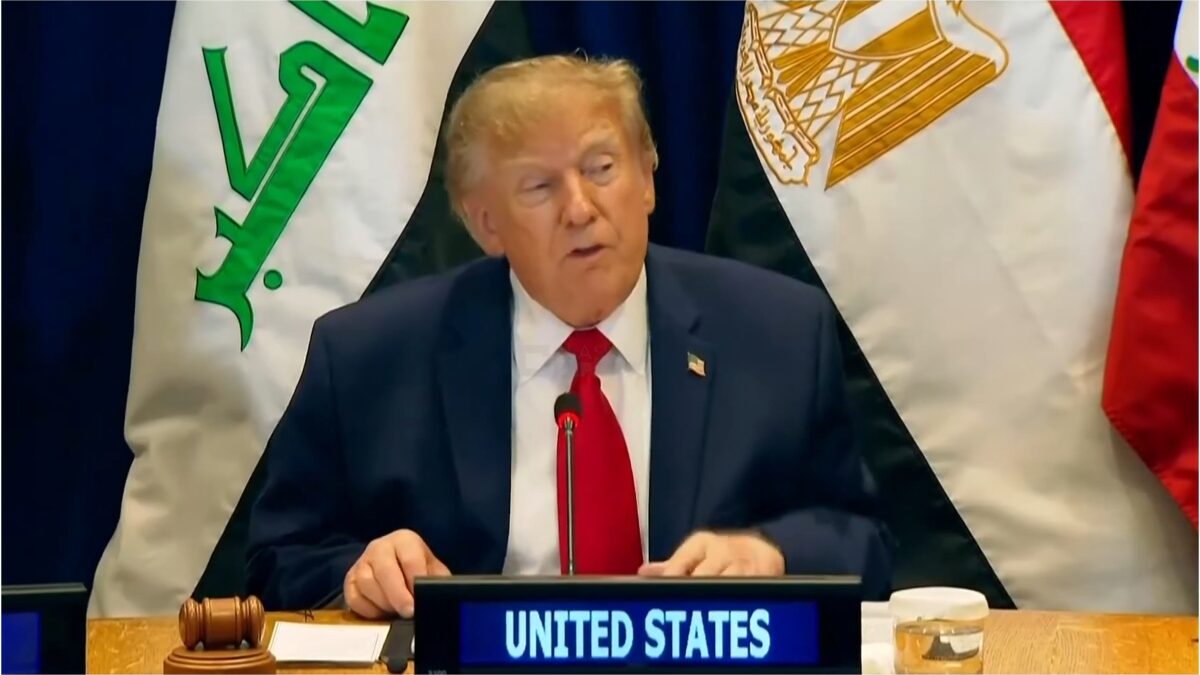
The United Nations General Assembly is usually a week-long exercise in nothing: speeches nobody reads, resolutions nobody enforces, dictators applauding each other in a building American taxpayers largely fund. Tuesday was different, and the difference is worth marking.
Start with Iran. Steve Witkoff and Jared Kushner spent roughly three hours with mediators representing Tehran — not the regime directly, as the president was careful to note, but close enough to matter. Trump called the session productive and said there’s momentum toward a deal. Skepticism is warranted, always, with a regime that has spent four decades treating negotiation as a delaying tactic. But notice why Iranian mediators were in the room at all. They are there because the regime’s proxies have been dismantled, its air defenses exposed, its nuclear program set back, and its economy squeezed to the point where stalling has costs. This is what leverage produces. The last administration offered sanctions relief and hoped for goodwill and got neither. This one applied pressure and got a three-hour meeting.
WATCH:
Trump on Iran:
Steve and Jared had a very productive meeting today with mediators of Iran. We will see what happens with that.
I think there’s a lot of momentum for them to make a deal. That’s what we are hearing from everybody. pic.twitter.com/WWOVgLO39E
— Clash Report (@clashreport) September 22, 2026
Then the allies, and the contrast is instructive. Japan’s Sanae Takaichi arrived with a full agenda and, when the press lingered, had her translator suggest that everyone leave so the two leaders could work. It got a laugh, and it also captured something real: a partner who treats a meeting with the American president as time to be used, not a photo to be posted.
Britain’s new prime minister, Andy Burnham, was something of a surprise. Keir Starmer’s tenure was a long study in lecturing Washington while asking it for favors. Burnham showed up talking about Rolls-Royce, energy, and immigration, and said plainly that Iran must never be a nuclear power. Trump called him a natural businessperson and predicted he’d be a great prime minister. Whether that holds is anyone’s guess, but a British government that leads with commerce and security rather than climate homilies is a change in the right direction.
Burnham also asked to raise Jimmy Lai’s imprisonment with Xi Jinping this week. Good. Lai is a publisher rotting in a Chinese jail for the crime of running a newspaper Beijing disliked. That an incoming Labour prime minister is carrying that message is a sign that the free world’s spine hasn’t entirely dissolved.
Add the Greenland security agreement, signed the same day, and the Zelensky meeting, and you have a single afternoon that produced more tangible movement than most full sessions of this body generate in a year.
The lesson isn’t complicated, and it’s the one conservatives have been making since Reagan. Adversaries negotiate when the alternative is worse for them. Allies cooperate when they believe American commitments mean something. Neither happens because of a stirring speech in a glass tower on the East River.
The deal with Iran may still collapse. Most of them do. But the meeting happened, and it happened for reasons that have nothing to do with the United Nations and everything to do with what came before it.