
President Trump floated an idea on Wednesday that sounds radical only because Washington has spent sixty years assuming the opposite: get the federal government out of the welfare business and hand the programs back to the states. His claim is that doing so would erase roughly 75 percent of the fraud the feds currently chase. The specific number is his, and it’s unverified. The logic underneath it is sound, and it doesn’t depend on the number being exact.
Start with why fraud flourishes in the current system. Most welfare programs are a split arrangement: states administer them, but Washington subsidizes a large share of the cost. That structure is a machine for waste, because it severs the people spending the money from the people raising it. When a state can run a program largely on someone else’s dollars, the incentive to police eligibility, chase down abuse, and cut waste is weak — the savings from diligence flow back to the federal treasury, not the state’s own budget. Nobody guards a account they don’t own.
Trump’s illustration was characteristically blunt — a nurse who allegedly stole $100 million and got caught only because she started driving a million-dollar Ferrari. Set aside whether every detail holds; the point survives. Fraud on that scale doesn’t happen because auditors are incompetent. It happens because the system is built so that no one with real skin in the game is watching closely enough to notice until the thief buys a supercar.
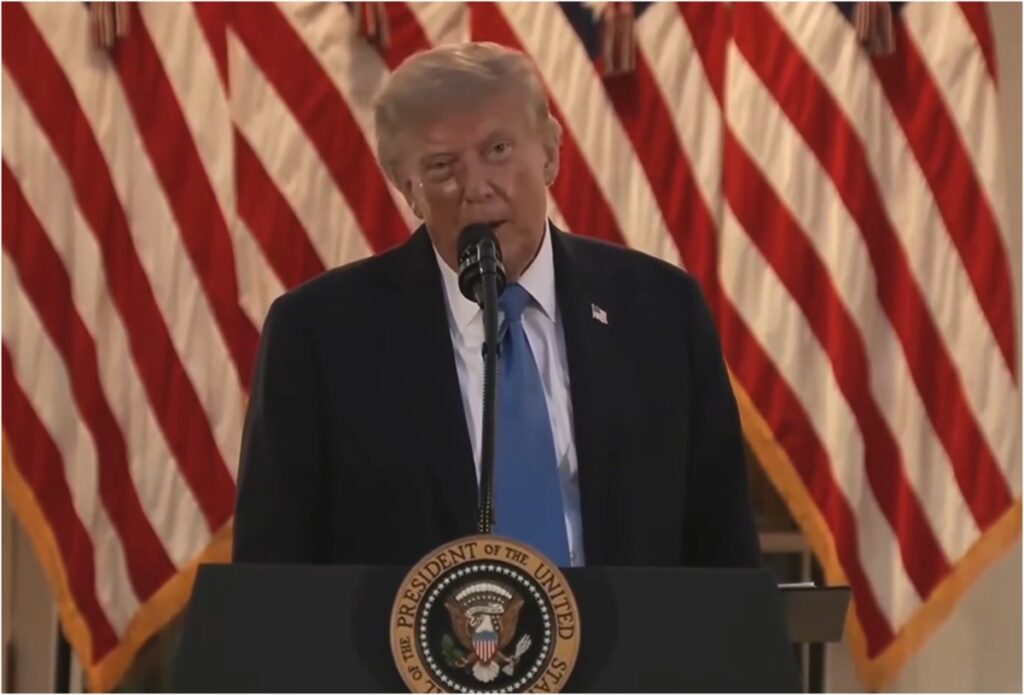
? BOOM! President Trump just said we should force the STATES to run welfare rather than the federal government to slash fraud by -75%
"We have to give things like the LEARING Centers — the federal government runs this stuff. We should run the military and the country. The… pic.twitter.com/GTImPx1X8q
— Eric Daugherty (@EricLDaugh) September 3, 2026
Now flip the incentive. Make states carry more of the cost and answer directly to their own voters for how the money is spent, and the calculus changes overnight. A governor who has to fund welfare out of a state budget that also pays for roads and schools has every reason to run it tightly. A state legislature that faces local taxpayers at the next election can’t hide behind a federal appropriation. Accountability works best when it’s close, visible, and financial — and returning these programs to the states delivers all three.
California is the cautionary tale the current model produces: generous federal subsidies layered on top of the state’s own administrative failures, creating an environment where abuse thrives precisely because no one bears the full cost of tolerating it.
The honest objections deserve a hearing. Fifty different state systems mean fifty different standards, and some states will run leaner programs than others — which critics will call a race to the bottom and supporters will call federalism doing exactly what it’s supposed to do. There’s a real debate there about a safety net’s minimum floor, and it shouldn’t be waved away.
But that debate is a feature, not a bug. Returning welfare to the states would force the conversation Washington has dodged for decades: what should these programs actually do, how should they be run, and who should pay. Right now the answer to that last question is “someone else.” That’s the whole problem.