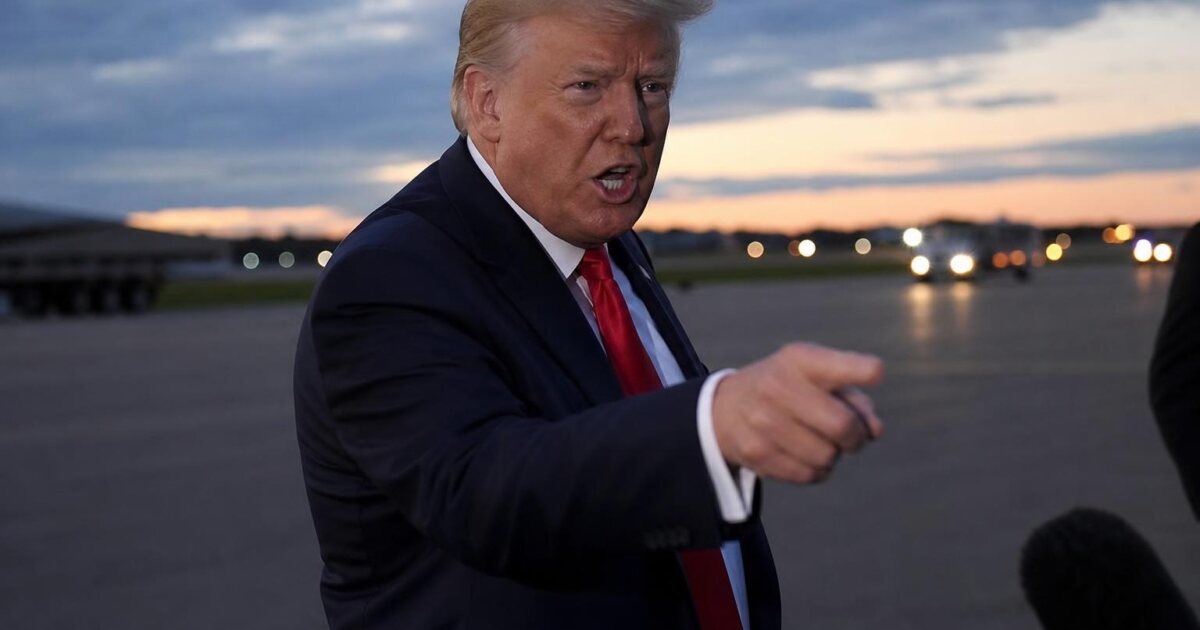
Republicans may have gotten shellacked in the midterms, but President Trump isn’t letting up on his efforts to Make America Great Again.
Trump announced a new trade framework with Thailand on Tuesday that would eliminate tariffs on American exports while opening the door to billions of dollars in additional purchases of U.S. agricultural products.
Trump unveiled the agreement during a visit to the Philippines as his administration continues negotiating bilateral trade arrangements aimed at expanding access for American companies and reducing longstanding trade barriers.
Under the framework, Thailand would eliminate tariffs on approximately 99% of U.S. goods entering the country. The agreement would also significantly increase Thai purchases of American agricultural products, with approximately $2.6 billion in additional purchases expected annually.

Those purchases are expected to include corn, soybeans, animal feed, meat and other agricultural commodities produced by American farmers.
Trump presented the framework as another example of his tariff strategy producing concessions from foreign trading partners.
“For years, other countries took advantage of the United States on trade,” Trump said while discussing his administration’s broader trade agenda. “Those days are over.”
The agreement would give American exporters substantially greater access to Thailand, one of Southeast Asia’s largest economies and an important manufacturing and agricultural trading partner.
“Today’s deal lays the foundation for much stronger trading relationship that will bring the United States and Thailand closer than ever before,” Trump said.
“Thailand will eliminate all tariffs on U.S. exports … and remove substantial non-tariff barriers on American vehicles, medical devices, pharmaceuticals, ethanol and poultry. Thailand will also be buying an estimated $2.6 billion in additional U.S. agricultural products,” he added.
Thailand has historically maintained tariffs and other barriers affecting U.S. agricultural and industrial products.
The new framework is designed to reduce those barriers while addressing additional regulations that American companies have argued make it more difficult to compete in the Thai market. Thailand would also commit to addressing non-tariff barriers affecting U.S. exports.
Those provisions include standards and regulatory requirements covering agriculture, automobiles, medical products and other industries.
The Trump administration has made eliminating both tariffs and non-tariff barriers a central objective of its negotiations with foreign governments.
Agriculture represents one of the most significant portions of the agreement. American farmers have faced uncertainty during Trump’s global tariff campaign as trading partners imposed retaliatory duties and international commodity markets adjusted to changing trade relationships. The administration has sought large agricultural purchase commitments as part of several negotiations.
“This is an incredible victory for both countries, both the people of Thailand and the American people. And I look forward to finalizing the details of our formal agreement in the coming weeks,” Trump said, noting that they were signing “a joint statement talking about the deal,” ahead of its completion.
BREAKING: President Trump announces a major new trade deal with Thailand alongside Prime Minister Anutin Charnvirakul, delivering massive wins for American farmers and exporters.
Under the agreement, Thailand will eliminate all tariffs on U.S. exports, tear down major trade barriers on American vehicles, medical devices, pharmaceuticals, ethanol, and poultry, and buy an estimated $2.6 billion in additional U.S. agricultural products.
Download the FOX News app for the latest details: https://t.co/BAyV31y5kz
— Fox News (@FoxNews) November 17, 2026
The Thailand agreement could provide another significant overseas market for American producers if the promised purchases materialize.
The framework follows months of negotiations between Washington and Bangkok after Trump imposed new tariffs on imports from numerous countries.
Thailand had faced a substantially higher tariff rate before negotiating with the administration. The two governments subsequently reached an interim arrangement that lowered the U.S. tariff rate on Thai goods while negotiations continued.