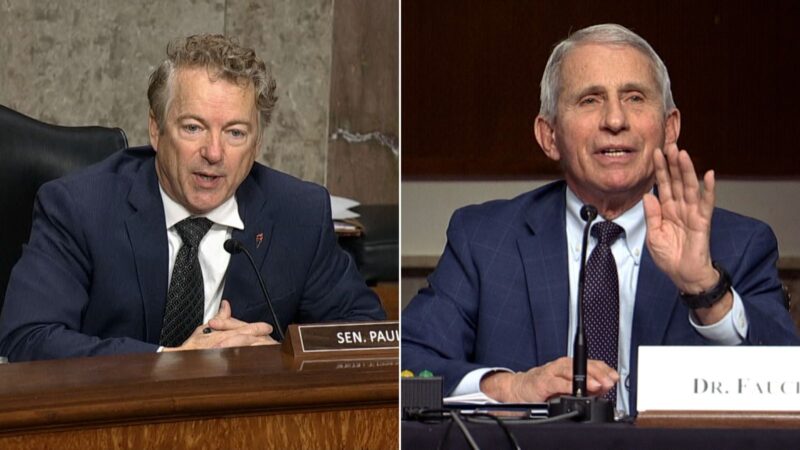
Rand Paul has been building this case against Anthony Fauci for five years. He’s read every document. He’s interrogated Fauci in seven previous Senate hearings. He has his diary. He has the emails. He has the gain-of-function research records. He has the classified intelligence about COVID’s origins. And yet on Tuesday night, Paul told Katie Pavlich on NewsNation that Fauci’s decision to plead the Fifth 111 times actually surprised him.
That’s remarkable. And it tells you something important.
Paul’s argument — the same one Ryan Goodman, Obama’s former Pentagon counsel, made on CNN — is legally straightforward. Biden’s pardon covers Fauci’s past conduct. If you are pardoned, you cannot be criminally prosecuted for the pardoned conduct. If you cannot be criminally prosecuted, you cannot incriminate yourself. If you cannot incriminate yourself, you have no Fifth Amendment right to invoke. The constitutional protection against self-incrimination only protects you when your testimony might actually send you to prison. Fauci’s testimony about pre-2025 NIH conduct can’t send him to prison. Biden already signed the get-out-of-jail card.
TONIGHT at 10 p.m.
Senator @RandPaul says he was surprised Anthony Fauci took the Fifth at his hearing today – despite receiving a sweeping pardon from President Biden.
Tune in for the full interview with @KatiePavlich on @NewsNation! pic.twitter.com/XmNKYnK05F
— Katie Pavlich Tonight (@KatiePavlichNN) July 29, 2026
So why did Fauci refuse to answer? This is the question that Paul’s surprise points toward. The most obvious answers are the most concerning. Fauci’s lawyers may believe Biden’s pardon has gaps — conduct it doesn’t cover, or whose coverage is genuinely uncertain. The CIA whistleblower James Erdman has pointed to deep financial conflicts of interest inside NIH and suggested the corruption follows the money in ways that may extend beyond what the pardon explicitly covers. The pardon itself may be legally contestable on autopen grounds. And there’s Florida’s state investigation — entirely outside the federal pardon’s reach — which creates its own jeopardy for anything Fauci says publicly.
A man with nothing to fear from his testimony doesn’t plead the Fifth 111 times. He answers the questions and goes home. The Fifth Amendment calculus — accepting the reputational damage of a mass Fifth Amendment invocation in exchange for silence — only makes sense if there’s something to hide that the pardon doesn’t fully protect.
What happens next is now on the DOJ. Paul has scheduled a contempt vote for next week in committee — a felony referral to the Justice Department for Fauci’s refusal to testify when his Fifth Amendment claim was legally inapplicable. As Paul framed it: “Can you plead the Fifth Amendment when you’ve been pardoned? If you’ve already been granted immunity, how can you be seeking immunity from self-incrimination if you’ve already been granted immunity?”
It’s an airtight question. And the DOJ under Todd Blanche — once confirmed — gets to decide whether to pursue it.
Rand Paul has been right about Fauci for five years. He was right about gain-of-function. He was right about the lab leak. He was right about the masks. He was right about natural immunity.
And now he’s right that a pardoned man refusing to answer Congress has a serious legal problem.
The contempt vote is next week. Stay tuned.