
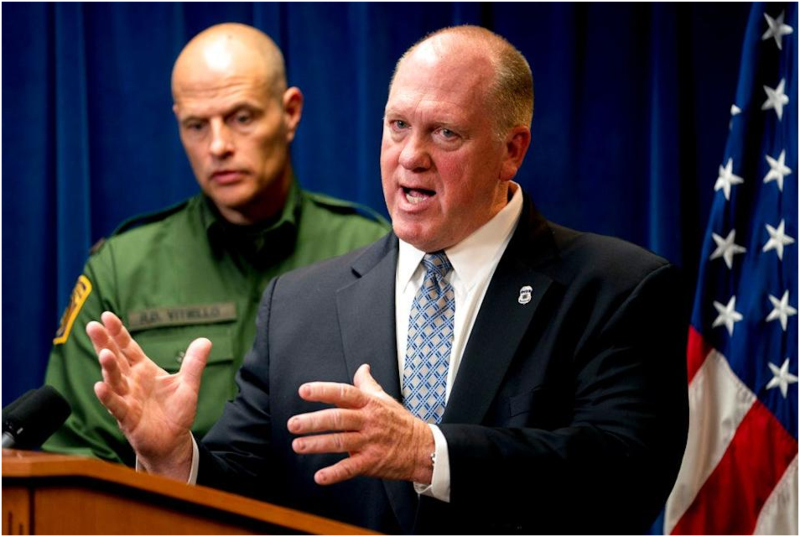
For years, Minnesota’s political leadership treated cooperation with federal immigration authorities as a moral sin. Sharing basic jail release information with federal law enforcement was framed as cruelty, extremism, or worse. The result wasn’t compassion — it was chaos. Now, thanks to a blunt dose of reality from Tom Homan, that dangerous game is finally coming to an end.
Homan’s message was refreshingly simple: if Minnesota counties want fewer federal agents operating in neighborhoods and fewer volatile street encounters, then jails need to do the obvious — notify U.S. Immigration and Customs Enforcement when criminal illegal immigrants are about to be released. That’s it. No mass roundups. No constitutional crisis. Just basic law-enforcement coordination.
This is how things used to work before sanctuary politics turned common sense into taboo.
ICE issued a memo on Monday explaining that the agency is shifting toward “targeted enforcement of individuals with a criminal background.” The memo emphasized that “ALL CALLS MUST HAVE A CRIMINAL NEXUS.”
And during a press conference on Thursday, Homan explained that Minnesota Attorney General Keith Ellison “has clarified for me that county jails may notify ICE of the release dates of criminal public safety risks so I can take custody upon the release from the jail.”
Homan stated that the Minnesota Department of Corrections has consistently complied with ICE detainers and emphasized that any decrease in the number of federal agents in Minnesota would depend on ongoing collaboration from state and local officials.
“As we see cooperation happen, then the redeployment will happen,” he said.
The left sold Minnesotans a fantasy that refusing to cooperate with ICE would somehow make communities safer. In reality, sanctuary policies guaranteed the opposite. When jails withhold release information, federal agents are forced to track suspects after they’re back on the street — at workplaces, in parking lots, or during traffic stops. That increases risk for agents, suspects, and bystanders alike. Then, when something goes wrong, the same politicians who created the problem rush to the cameras to blame ICE.
It’s political malpractice disguised as virtue.
What Homan is demanding isn’t radical. It doesn’t deputize local police as immigration agents. It doesn’t require state officials to enforce federal immigration law. It simply restores the ability of agencies to communicate — a basic function of public safety that sanctuary activists deliberately sabotaged. The refusal to share release dates was never about protecting rights; it was about signaling ideological purity to progressive activists.
Enjoying our conservative news and commentary? Make sure you share and tell your friends about us!
And the costs have been real. Minnesotans have watched a steady drumbeat of confrontations, protests, and disorder tied directly to policies that force enforcement into the open instead of handling it quietly inside jail walls. Sanctuary leaders created the conditions for spectacle — then pretended to be outraged by the outcome.
Now the bluff has been called.
.@RealTomHoman: "ICE is enforcing the laws enacted by Congress… No agency or organization is perfect, and @POTUS and I, along with others in the Administration have recognized that certain improvements could and should be made. That is exactly what I'm doing here." pic.twitter.com/8D6dyX0QdA
— Rapid Response 47 (@RapidResponse47) January 29, 2026
Homan also exposed another inconvenient truth: cooperation reduces enforcement visibility. When ICE can pick someone up directly from custody, there’s no need for agents to fan out across neighborhoods. That’s exactly what Democrats claim to want — yet their policies made it impossible. Sanctuary politics thrives on confrontation, not solutions.
Predictably, critics are already crying “bullying” and “federal overreach.” But accountability isn’t bullying. Enforcing the law isn’t extremism. And expecting basic cooperation between agencies isn’t tyranny — it’s governance.
Minnesota’s leaders spent years playing games with public safety to appease activists who don’t have to live with the consequences. That era is ending. The sanctuary experiment didn’t fail quietly — it failed publicly, dangerously, and expensively.
Homan didn’t force Minnesota to change course. Reality did.


