
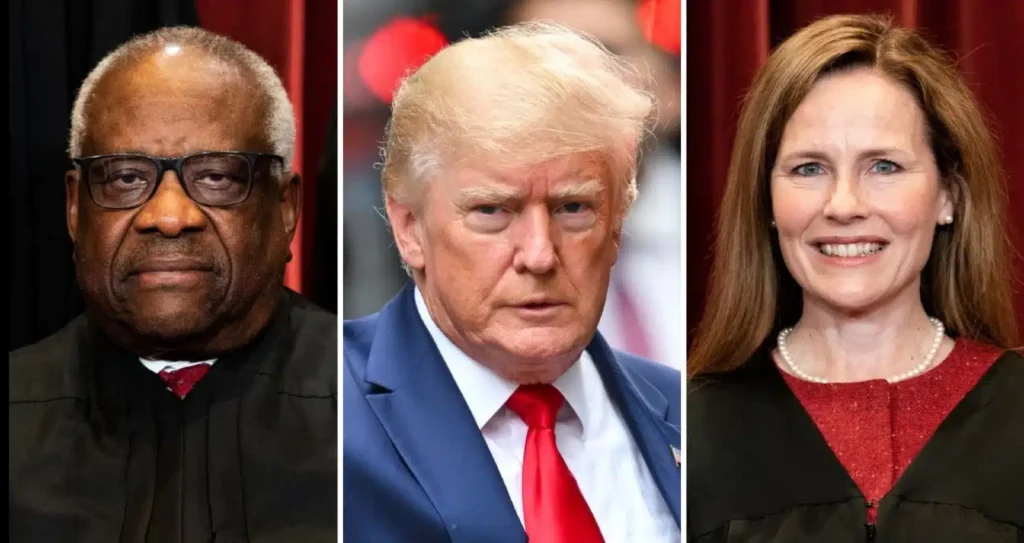
The Supreme Court announced Friday that it will take up the constitutionality of President Donald Trump’s executive order ending birthright citizenship for children born in the United States to parents who are here illegally or only temporarily. The case, Trump v. Barbara, will be argued next spring, with a ruling expected by late June 2026.
This will be the first time the Court squarely addresses the core legal question behind Trump’s birthright citizenship policy — and it could reshape immigration law for generations.
The justices will hear Trump v. Barbara next spring, with a ruling expected by late June 2026. It will be the first time the Supreme Court directly confronts the merits of President Trump’s birthright citizenship policy — a case that could have sweeping implications for immigration and constitutional interpretation.
Under Trump’s January 20 executive order, the federal government would no longer issue citizenship documents to children born on U.S. soil unless at least one parent is a U.S. citizen or lawful permanent resident. Children born to parents on temporary visas — or to those here illegally — would not automatically receive citizenship.
Federal courts immediately moved to block the order. Judges claimed it violated the 14th Amendment’s Citizenship Clause, which declares citizenship for “all persons born or naturalized in the United States, and subject to the jurisdiction thereof.”
The clause was written in 1868, in the aftermath of the Civil War, to guarantee citizenship to formerly enslaved Americans. And while the Supreme Court clarified in United States v. Wong Kim Ark (1898) that children born to permanent legal residents receive citizenship, the Court has never ruled on whether that constitutional guarantee extends to children of illegal immigrants or short-term visa holders.
That’s the core issue now heading to the Court — and it’s why this case could finally settle a debate Washington has avoided for decades.
Trump administration attorneys maintain that parents in the U.S. only temporarily — or illegally — are not “subject to the jurisdiction” of the United States in the way the 14th Amendment requires. Therefore, they argue, automatic citizenship does not apply to their children. Officials also point out that current practices have fueled an entire industry of “birth tourism,” with the Center for Immigration Studies estimating more than 20,000 such cases every year.
The case now pits executive authority against competing interpretations of the Constitution. More than 22 states, along with several immigrant-rights groups, have filed lawsuits seeking to permanently block the executive order, setting the stage for a major Supreme Court showdown.


