There’s no question Republicans suffered tremendous losses up and down the ballot at local, state, and federal levels, but Democrats shouldn’t stroll into power in January thinking their big wins mean something they don’t.
CNN chief data analyst Harry Enten is warning Democrats against interpreting their sweeping midterm victories as evidence that voters have suddenly embraced the party, pointing to polling showing the Democratic brand remains unpopular nationally.
Enten delivered the analysis Friday on CNN while discussing the internal leadership battles unfolding among Democrats after their major November gains. The results themselves were undeniably strong for Democrats, who captured both the House and Senate after voters delivered Republicans significant losses across the country.
But Enten argued the polling tells a more complicated story about why voters supported Democratic candidates. The Democratic Party currently has a net favorability rating of minus six points in the polling average Enten presented.

“More people have an unfavorable than favorable view of the Democratic Party,” Enten said, “and this is vastly different than what we’ve seen in prior wave elections, after midterms in which the Democrats had won.”
Enten compared the numbers with two previous Democratic wave elections. Following Democrats’ 2018 takeover of the House, the party had a positive three-point net favorability rating. After Democrats captured both chambers in the 2006 midterms, their net favorability stood at plus 26 points.
That represents a dramatic difference from Democrats’ current minus-six standing despite their substantial electoral victories. “So when you look at the math, you look at the polling data, you have to just say, wait a minute,” Enten said. “This isn’t necessarily a mandate for the Democratic Party.”
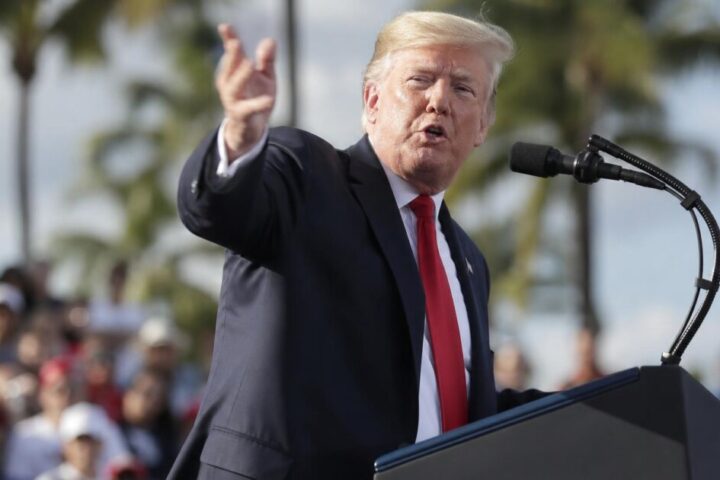
“What this really was, was not a plus for the Democrats, least with the brand overall, it was really going up against President Trump. So Democrats, as they look forward to the next Congress, this wasn’t necessarily a vote for them. It was a vote against the other guys,” he added.
CNN anchor Kate Bolduan compared the situation to voters giving Democrats a “conditional contract or a probationary contract.” “They got in, but it was not a vote for them,” Enten responded. “It was a vote against the other guys.”
Other polling also shows Democrats remain underwater nationally. The RealClearPolling average through Nov. 16 showed 38.9% of Americans viewing the Democratic Party favorably compared with 52.9% who viewed it unfavorably.
Enten also highlighted troubling numbers for the party’s congressional leadership. Senate Democratic leader Chuck Schumer was 30 points underwater in the polling Enten presented and even had a negative rating among Democrats.
House Democratic leader Hakeem Jeffries, who is positioned to become speaker when the new Congress convenes, was 17 points underwater. “This is a dynamic duo in terms of being unpopular,” Enten said.
Enten’s latest analysis represents an important distinction from his immediate assessment following Election Day.
Earlier this month, he called Democrats’ victory a “huge mandate” after examining the extraordinary breadth of their electoral gains.
Enten said all 50 states shifted toward Democrats compared with the 2024 presidential baseline and described the results as a historic “blue tsunami.”
His latest analysis focuses instead on whether those results represented affirmative enthusiasm for Democrats or rejection of Trump and Republicans.
Enten also highlighted another potential warning sign for the incoming Democratic Congress: investigations of the Trump administration.
According to polling presented by CNN, 67% of Americans said they were worried Democrats would spend too much time investigating Trump. That included 49% of Democrats.
“We’re going to have to wait and see if whether Democrats take what the voters have given them and go too far,” Enten said.
He said voters could instead expect Congress to address major concerns including inflation and other economic pressures.
The numbers leave Democrats entering January in an unusual position. They won an unquestionably sweeping midterm victory, but polling indicates many of the voters responsible for that victory still hold negative opinions of the Democratic Party itself, while other analyses note that more than one-third of Trump’s 2024 voters stayed home.