Democrats got together to nominate who they want to lead them when their new House majority is sworn in come January 3.
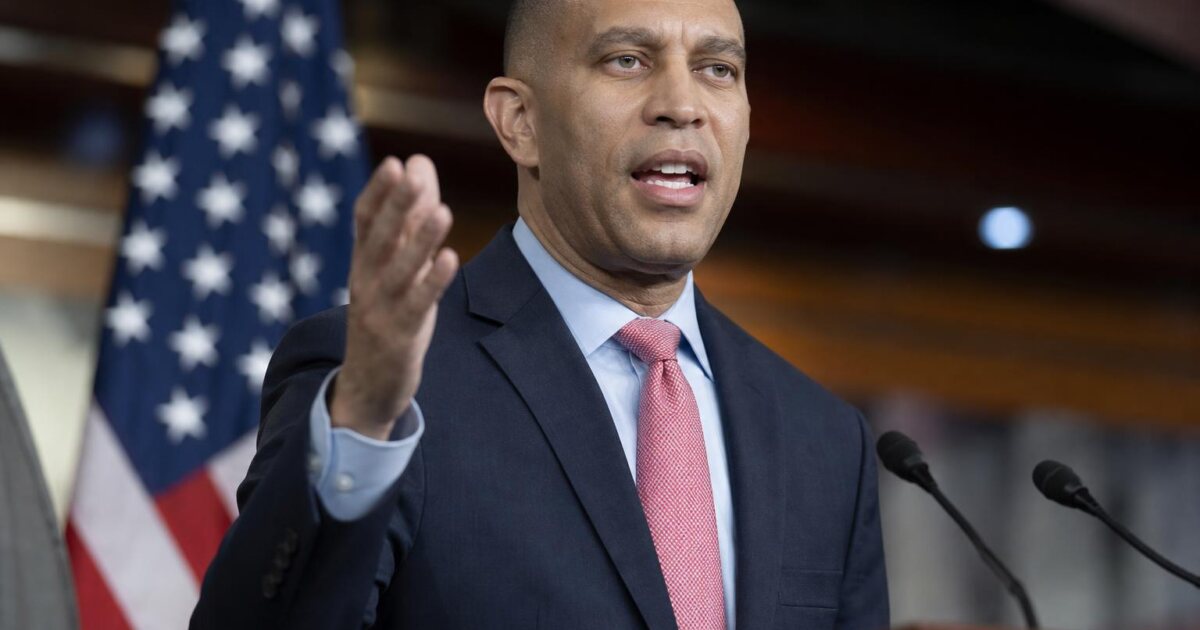
House Minority Leader Hakeem Jeffries overwhelmingly won the Democratic nomination for House speaker Wednesday, putting the New York Democrat on track to make history when the new Congress convenes in January.
Jeffries won the closed-door Democratic caucus vote 251-11, despite resistance from a small group of progressives unhappy with the party’s current leadership and direction. No Democrat formally challenged Jeffries for the nomination. The caucus vote does not formally make Jeffries speaker.
He must still win at least 218 votes during the full House speaker election on Jan. 3, but Democrats’ large incoming majority gives him substantial room for defections. Democrats are projected to hold at least 257 House seats, with several races still unresolved, according to Reuters.

NEWS — Reps Claire VALDEZ
Darializa AVILA CHEVALIER
Adam HAMAWY
Frederick HAYNES
Melat KIROS
Donavan MCKINNEY
Chris RABBall vote no on Jeffries for Speaker
“There is still work to be done to ensure the direction our party takes … reflects what our constituents are demanding” https://t.co/98esCkhs9P
— Ally Mutnick (@allymutnick) November 18, 2026
Jeffries specifically requested a recorded caucus vote rather than winning the nomination by acclamation, giving Democrats an opportunity to formally register opposition.
“Certainly seems to me it would be appropriate that we take exactly the same approach to give every single person the opportunity to weigh in one way or the other on who the caucus feels is best positioned based on track record, experience, vision,” Jeffries said Tuesday.
The 11 dissenting votes showed that Jeffries still faces resistance from his party’s progressive wing despite encountering no serious challenger for the gavel. Reuters reported that seven incoming progressives acknowledged voting against Jeffries as they continued seeking commitments from him on the party’s agenda.
Rep. Ayanna Pressley of Massachusetts had been promoted by some activists as a possible alternative, but she never entered the race. Maryland Rep. Jamie Raskin also publicly ruled out challenging Jeffries.
The internal tensions became highly visible last week when Jeffries appeared at the What’s Next political conference in Denver and was repeatedly interrupted by protesters demanding new Democratic leadership.
“You’re a f—ing traitor. You don’t fight for the people,” one protester yelled while being removed from the venue.
About 10 demonstrators interrupted Jeffries during the event, with activists criticizing his positions on healthcare, Israel and other progressive priorities.
Jeffries largely brushed aside the confrontation, joking that dealing with hecklers was “light work” for someone raised in Brooklyn.
Other attendees responded by chanting Jeffries’ name as protesters were escorted out.
“We’re going to have the largest majority that any party has had this century. And that comes from all across the country,” Jeffries told the Denver gathering. “And in the last two years, we’ve worked hard to battle Republicans on every issue.”
The leadership fight has also highlighted disagreements among newly elected Democrats about what message the party should pursue after its midterm victories.
Rep.-elect Don Leonard of Ohio previously said he would not support Jeffries if the speaker vote were held immediately and suggested Pressley as an alternative.
Other Democrats who initially expressed reservations subsequently moved toward Jeffries after meeting with him about their priorities.
Despite those disputes, Wednesday’s 251 votes demonstrated that organized opposition inside the Democratic caucus remains far short of threatening Jeffries’ path to the gavel.
Democrats also began selecting the remainder of their incoming leadership team. Massachusetts Rep. Katherine Clark is positioned to become majority leader, while California Rep. Pete Aguilar is expected to become Democratic whip.
Republicans, meanwhile, have selected House Judiciary Committee Chairman Jim Jordan of Ohio to lead their conference after they move into the minority.