Whenever you hear a Democrat whine that President Donald Trump is “weaponizing” the federal justice system, be sure to remind them that if he’s doing it at all it’s only because he’s following in Joe Biden’s footsteps.
Newly declassified Biden-era FBI records reveal that agents tracked the travel plans of Melania and Barron Trump while preparing to search Mar-a-Lago in 2022 and later monitored phone metadata belonging to Susie Wiles, now President Donald Trump’s White House chief of staff.
The records provide new details about “Plasmic Echo,” the FBI’s investigation into classified and government documents taken to Trump’s Florida estate after he left office in January 2021. Documents released by the White House Government Transparency Task Force show agents gathering information about the Trump family’s movements as they prepared for the unprecedented search of a former president’s residence.
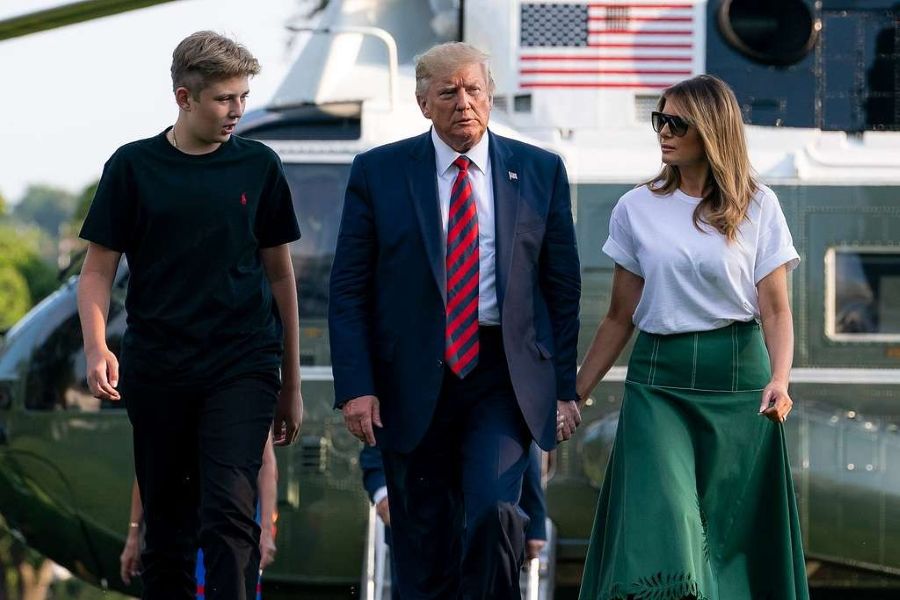
A late-May 2022 operational checklist instructed investigators to “finalize FBI understanding of FPOTUS/FLOTUS/minor son’s travel,” including the type of aircraft involved and specific travel timelines.
Another internal FBI communication dated June 1 stated that any search warrants would be executed after Trump had departed Mar-a-Lago. The records indicate the travel information was collected to help agents determine when the property could be searched rather than as evidence that Melania or Barron Trump were suspected of criminal activity.
The FBI ultimately searched Mar-a-Lago on Aug. 8, 2022. Agents searched Trump’s office, storage areas and other locations where government records might have been kept, recovering thousands of documents, including more than 100 bearing classification markings.
The newly released records also provide additional information about how the investigation was authorized. Then-FBI Director Christopher Wray recommended that Attorney General Merrick Garland approve the investigation as a “Sensitive Investigative Matter,” a designation applied to investigations carrying heightened political or other sensitivities.
Internal records acknowledged that an investigation involving Trump and officials from his first administration could affect the political process if it became public before an election.
The documents also reveal internal disagreements over the proposed Mar-a-Lago search. Personnel in the FBI’s Washington Field Office questioned whether investigators had established sufficient probable cause to search Trump’s residence and discussed whether additional negotiations with Trump’s attorneys should occur first.
The Justice Department ultimately obtained a search warrant from a federal magistrate judge. Separate portions of the Plasmic Echo records concern Wiles, who was running Trump’s political operation as he mounted his 2024 presidential campaign.
Between February and May 2023, investigators used a pen-register and trap-and-trace device to monitor activity associated with Wiles’ cellphone. The technology captured information including telephone numbers, call times and durations. It did not itself record the contents of Wiles’ conversations.
The records show investigators cataloged Wiles’ contacts with nearly two dozen attorneys associated with Trump, along with political advisers, campaign personnel and journalists.
Reporters from outlets including ABC News, The Washington Post and Politico appeared in the records. One May 19 entry documented a call to Wiles from a number identified by investigators as Trump’s “FPOTUS Vanity Number.” The call lasted 16 minutes and 11 seconds.
Kash Patel, now Trump’s FBI director, also appeared in investigative records. Reuters reported earlier this year that investigators obtained telephone records involving both Patel and Wiles while they were private citizens. Patel said those records contained information about the timing and recipients of calls rather than their contents.
Patel has characterized the collection as government overreach. The White House has gone further, accusing Smith and the FBI of improperly surveilling Trump’s political operation. “Jack Smith’s surveillance operation was a disgraceful abuse of government power,” White House spokeswoman Lauren Bis told Fox News.
Smith has disputed allegations that his investigations were politically motivated and has maintained that his team followed Justice Department policies and legal requirements. Investigators routinely obtain telephone metadata while attempting to establish timelines and relationships during criminal investigations.
Garland appointed Smith as special counsel in November 2022, after the Mar-a-Lago search. Trump was eventually charged with illegally retaining national-defense information and obstructing efforts to recover government documents. He pleaded not guilty and denied wrongdoing.
U.S. District Judge Aileen Cannon dismissed the case in July 2024 after concluding Smith’s appointment was unconstitutional. Smith appealed but abandoned the prosecution after Trump won the 2024 election, citing Justice Department policy against prosecuting a sitting president.