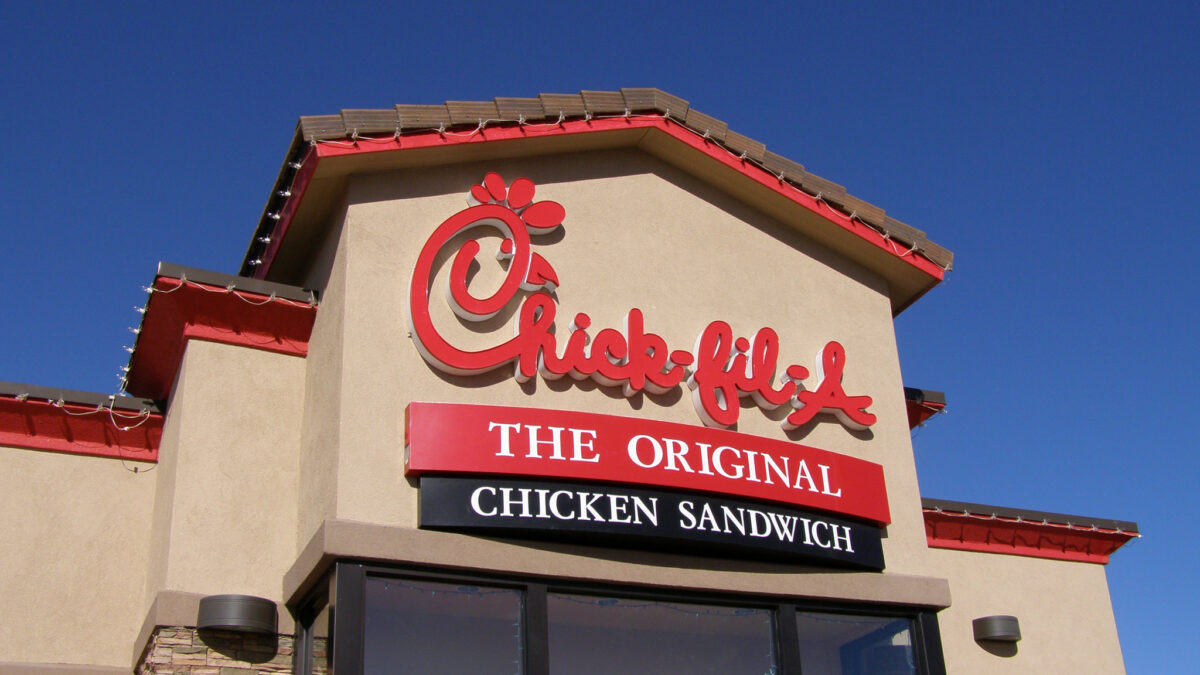
Iconic fast food brand Chick-fil-A is maintaining its traditional approach at the drive-thru, similar to how Publix and Stater Bros. have approached grocery checkout. These businesses are opting against automation through self-checkout and AI, valuing the human connection just as much as the products they offer:
Chick-fil-A is turning down artificial intelligence in its drive-thru lanes, choosing human employee interaction over automated order takers as competitors embrace voice technology.
Chick-fil-A CEO Andrew Cathy told CNBC that the company wants to keep human hospitality at the heart of its drive-thru experience.
The privately held chain generated nearly $23.9 billion in sales in 2025.
“From our experience, we really want that hospitality to be human to human,” Cathy said. “We’re not going to substitute that interaction with technology, because we feel like that hospitality is so important to create that warm environment for consumers.”
AI is meant to enhance and improve the human experience, not to eliminate it or add to our frustrations. In June, it was announced that McDonald’s, Wendy’s, Taco Bell, and Hardee’s would begin using the latest AI technology to supposedly improve the drive-thru experience.
However, Chick-fil-A won’t do it. This is another reason why they are considered the GOAT when it comes to adhering to their corporate purpose and staying true to their brand identity:
At the core of Chick-fil-A’s success lies its unwavering commitment to its brand values, purpose, and personality. Since its founding in 1946 by Truett Cathy, Chick-fil-A has embraced a people-first approach, valuing integrity, excellence, and service. This people-centric philosophy shapes every aspect of the Chick-fil-A experience and sets it apart from its competitors.
No doubt, and it’s why current CEO Andrew Cathy staying true to those customer-oriented values and principles is one of the main reasons why:
Truett Cathy, the visionary behind Chick-fil-A, sought to create a brand that not only provided high-quality food and exceptional service but also made a positive impact on the lives of its customers and employees. This brand purpose became the guiding force behind the company’s every decision and action, making it more than just a fast-food chain.
Chick-fil-A’s brand personality is rooted in their commitment to genuinely caring for their customers. From the moment customers interact with the friendly staff at the drive-through to the personalized rewards offered through their app, Chick-fil-A goes above and beyond to create a meaningful connection.
We’ve spent the last several years watching Cracker Barrel dismantle itself. Not through bad luck or a tough quarter, but through a deliberate decision to walk away from the thing it was built to be — and the shareholders have eaten the loss. That’s the market working exactly as it should. A company that forgets its own founding vision is a company telling its customers it no longer needs them, and customers have a way of taking that seriously.
The counterexamples are instructive, and they have something in common. Chick-fil-A sets the standard and holds it, and the reason it can is that nobody on an activist board or an ESG desk gets a vote. Private ownership means answering to the people who walk in the door rather than to a proxy season. In-N-Out operates on the same principle and produces the same result: food quality and service that no public competitor has managed to match in sixty years.
Which brings us to the drive-thru. Chick-fil-A has decided its customers will keep talking to a person. Not a voice model. Not a system that mishears “no pickles” and then cheerfully reads your order back wrong. A human being who hears you the first time. Commendable, indeed, in this day and age.