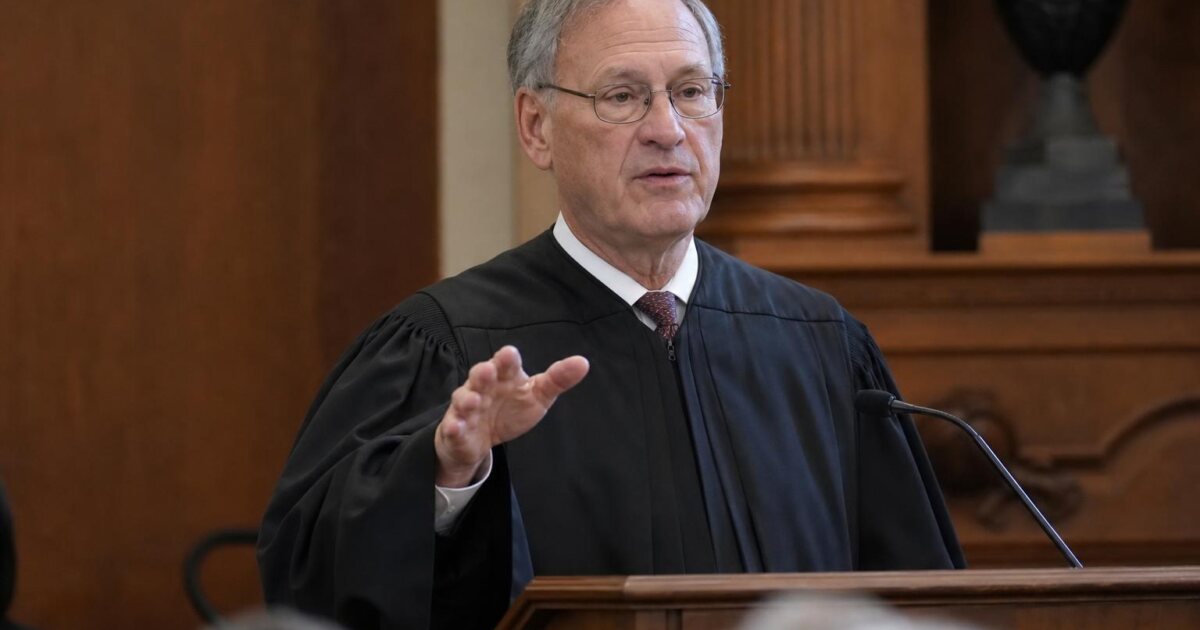
Supreme Court Justice Samuel Alito sat down with CBS News anchor Jan Crawford and delivered what might be the most honest job review in Washington: the work costs you friends, presidents yell at you from both directions, your approval ratings tank, and you still have to show up and do it anyway. Somehow the federal bureaucracy never manages this level of accountability.
The 76-year-old justice, appointed by President George W. Bush and now two decades into his tenure, said bluntly that major decisions have ended longtime personal relationships. “There are cases that have resulted in the loss of old friendships,” Alito said. “That’s something you have to live with.” Most people lose friends over fantasy football. Alito loses them over constitutional law. Different league entirely.
Dobbs, the Leak, and What Courage Actually Looks Like
Alito is best known as the author of the majority opinion in Dobbs v. Jackson Women’s Health Organization, the ruling that ended the federal constitutional right to abortion and returned the question to voters and their elected representatives. That decision came under extraordinary pressure after a draft leaked before the Court issued the final ruling, an event with no modern precedent in Supreme Court history.
Alito said the justices had no idea the draft would go public, but that once it did, pressing forward required something real. “We didn’t know it when we produced the draft that was leaked, but it required courage to go ahead with that because of the implications.” In the majority opinion itself, Alito wrote that the Constitution contains no reference to abortion and that no such right is implicitly protected by any constitutional provision, meaning the authority to regulate the issue belongs with the people through the democratic process.
Georgetown law professor Michele Goodwin called the “courage” framing “a bit ironic,” telling Newsweek the Court abandoned nearly 50 years of precedent. Alito’s counterpoint, implicit in the ruling itself, is that the age of a Court-created rule is not the same thing as its constitutional legitimacy.
That argument, written law versus long judicial reliance, is still the core of the Dobbs debate today. You can read more about the Alito CBS News interview and the full reaction from legal scholars in the original coverage.
Critics, Presidents, and a Bulletproof Vest
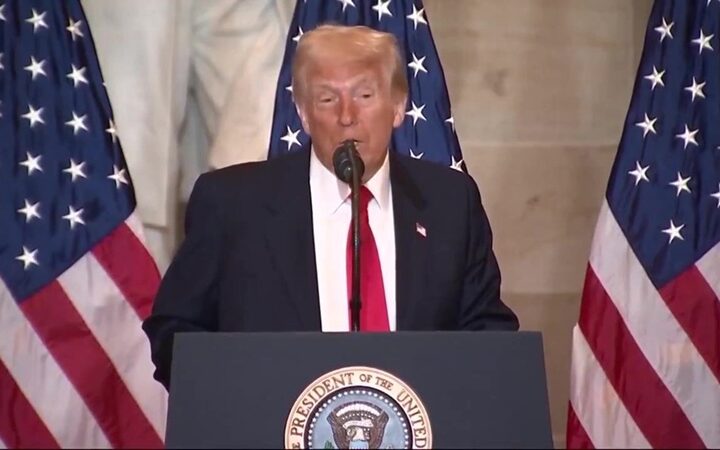
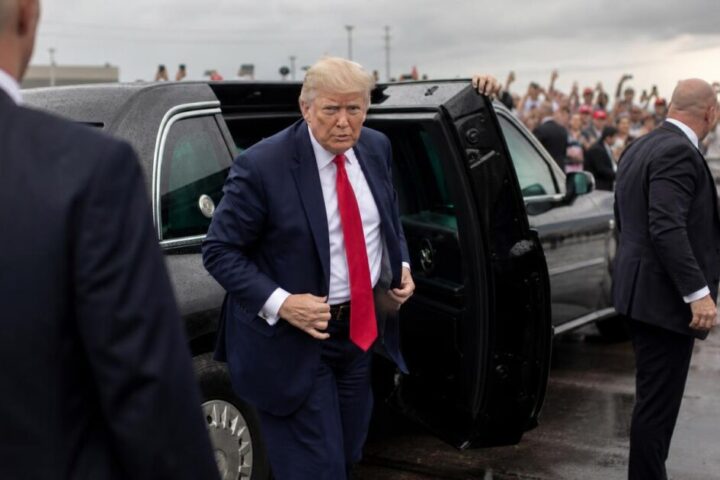
Alito also addressed the flood of criticism aimed at the Court, and here he did something Washington almost never does: he spread the blame evenly. “It’s been bipartisan,” he said. On President Trump’s pointed rhetoric toward judges, Alito offered the diplomatic understatement of the decade: “He has his own way of saying things.” He also said President Biden and his administration were “very harsh” toward the Court, and that President Trump “has been very harsh” as well.
Gabe Roth, executive director of the nonprofit Fix the Court, pushed back on the both-sides framing, telling Newsweek that threats against judges and justices have spiked in recent years and that the Trump administration’s words and actions have been “far more treacherous for the judiciary” than those of his predecessor.
Roth added that no one in the Biden administration doxed judges’ families, and stressed that violence and threats against judges are never acceptable. The security climate is not theoretical. Justice Amy Coney Barrett told the House Appropriations Committee in July that her security detail sent her home with a bulletproof vest and that she never expected to have to explain to her children what one was or why she needed to wear it.
Low Polls, Lost Friends, and He Is Not Leaving
Public trust numbers do not exactly make this job easier. A Gallup survey released September 30 found just 34 percent of Americans approved of the Court’s work, with 61 percent disapproving. A Pew Research Center survey from July 2026 found 53 percent held an unfavorable view of the Court, described as a three-decade low. Nothing says “thank you for your service” like a 34 percent approval rating.
Retirement speculation has trailed Alito, with some Republican lawmakers hoping to seat a replacement while President Trump remains in office. Alito acknowledged a justice his age has to weigh each term carefully.
He chose to stay. “I thought I could still continue to make a valuable contribution, which is why I became a justice and a judge in the first place.” That is about as plain as it gets. Friendships gone, drafts leaked, two presidents angry, approval ratings underwater, and the man is still at his desk. The Constitution does not grade on a popularity curve, and neither, apparently, does Samuel Alito.