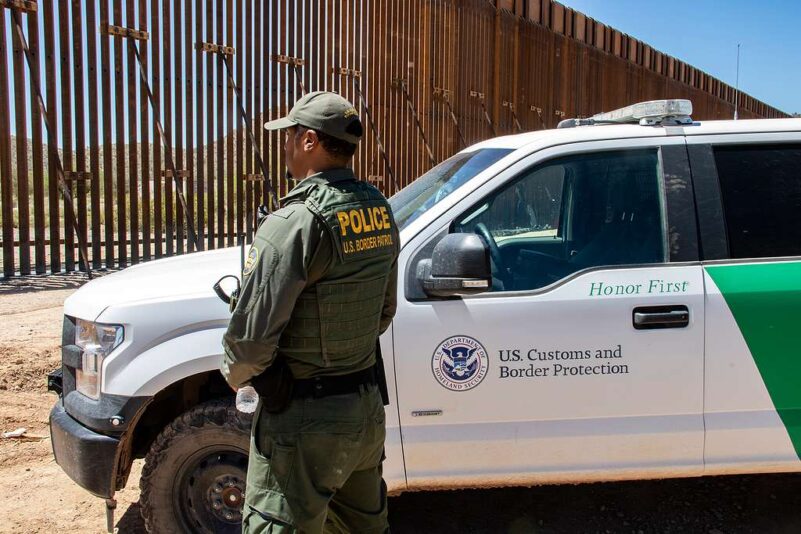
A federal judge in El Paso handed the Department of Homeland Security a loss on Friday, issuing a preliminary injunction that stops border wall construction and related infrastructure projects in the Big Bend region dead in their tracks. U.S. District Judge Kathleen Cardone ruled that plaintiffs are likely to succeed on the merits and face serious, irreparable harm without the court stepping in. So much for building anything before the lawyers arrive.
The order names DHS, Homeland Security Secretary Markwayne Mullin, and U.S. Customs and Border Protection as defendants, commanding them in no uncertain terms that they “SHALL NOT build border barrier or related infrastructure, or engage in any construction or ground disturbing activities, in the Big Bend Sector until and unless Defendants comply with all applicable laws.” Nothing motivates federal agencies quite like a judge in all caps.
The Bulldozers Stop, the Lawyers Keep Going
The plaintiffs, including the Center for Biological Diversity, Friends of the Ruidosa Church, and Big Bend area river guide and landowner Danny William Miller Jr., argue that DHS exceeded its constitutional authority by waiving environmental and historic preservation requirements to fast-track border projects. The government used a waiver under Section 102 of the Illegal Immigration Reform and Immigrant Responsibility Act of 1996 to set aside requirements under the National Environmental Policy Act, the Endangered Species Act, the Clean Water Act, and the National Historic Preservation Act. That is a lot of laws to wave goodbye to, even by Washington standards.
DHS argued in its June 9 waiver notice that additional barriers and roads are needed to prevent unlawful entry and smuggling, a goal most Americans outside of environmental law firms would consider reasonable. Secretary Mullin cited the congressional authority behind the waiver as his legal basis. The judge, for now, was not persuaded that the ends justified the means.
The Center for Biological Diversity called Friday’s ruling a “massive, historic victory.” Laiken Jordahl, the center’s national public lands advocate, was not exactly understated about it. Big Bend border wall construction halt “This is a historic victory for Big Bend and everyone who loves this wild corner of Texas,” Jordahl said. “No administration has the right to destroy a crown-jewel national park for political theater.”
Conservative Ranchers, Sheriffs, and a Very Animated Environmentalist
Jordahl made a point of noting that opposition to the construction is not a partisan affair, saying, “We’ve got conservative sheriffs. We’ve got conservative ranchers on our side. They have picked a fight with the toughest part of Texas in Big Bend.” When you have lost the conservative ranchers of West Texas, the political math gets complicated fast.
Former state Rep. Norma Chavez also attended in support of opponents, warning that a loss in Big Bend could complicate efforts to protect other sites like Mount Cristo Rey near El Paso. “Every American should be concerned at what’s happening,” Chavez told Border Report. She called the construction “a big land grab” and argued it threatens ecosystems that cross international boundaries.
Friday’s injunction covers only whether construction can continue while the litigation proceeds. The lawsuit separately seeks a permanent injunction and a declaration that the challenged waivers violate the Constitution, meaning this fight has many more courtroom appearances ahead of it. DHS will need to comply with applicable laws before any construction can resume, and the plaintiffs have made clear they intend to keep the pressure on until every waiver is invalidated. The administration built a legal strategy around moving fast, and a federal judge in El Paso just hit the pause button. In Texas, of all places. Don’t mess with Big Bend, indeed.