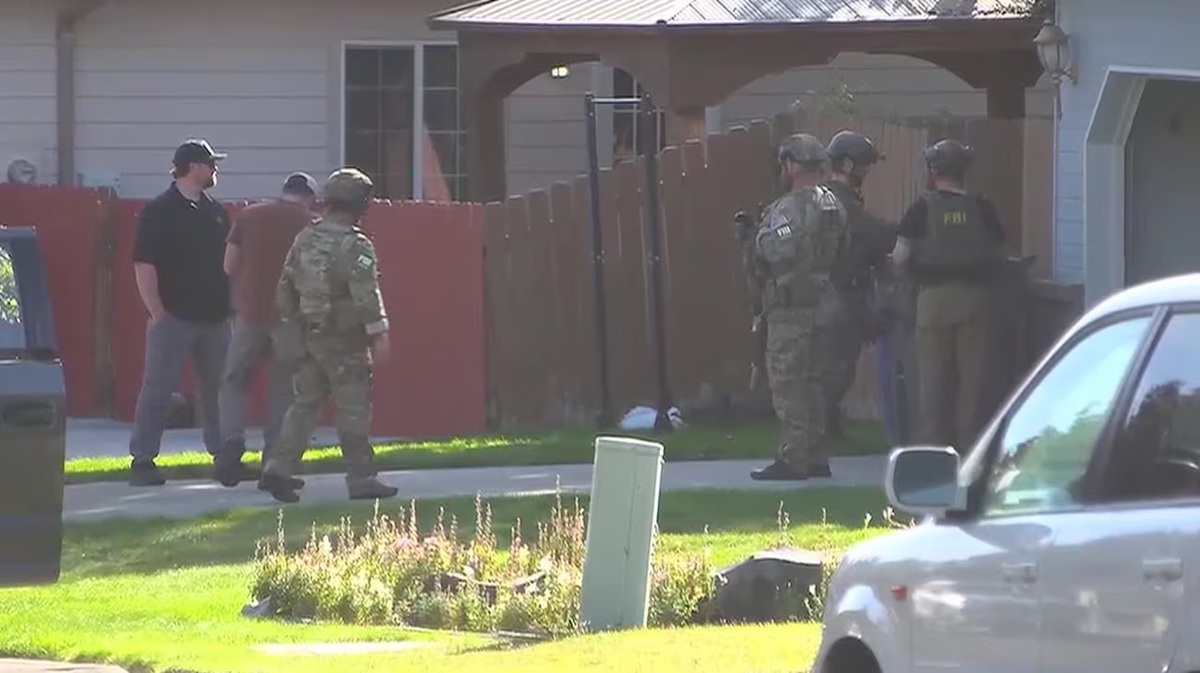
A Department of Energy electrical engineer has been arrested and charged with attempting to provide material support to the Iran-backed Houthis, including technical assistance, drone components, and materials commonly used to manufacture explosives, federal prosecutors announced. Ashton Hamed Ellaboudy, 51, of Richland, Washington, was taken into custody Thursday.
Federal prosecutors allege that Ellaboudy used his electrical engineering expertise, developed during his government career, in an effort to assist the Houthis, a designated foreign terrorist organization backed by Iran. He faces up to 20 years in federal prison if convicted, and is presumed innocent unless proven guilty in court.
From Washington State to Yemen, Allegedly on the Houthis’ Behalf
According to the criminal complaint, the FBI launched its investigation after learning Ellaboudy had purchased precursor chemicals, components, and other materials commonly associated with homemade explosive devices. Investigators also found he had purchased parts used to construct drones and remotely operated aerial systems.
Authorities allege Ellaboudy traveled from Washington state to Oman in September 2025 before crossing into Yemen, using an official passport previously issued to him while working for the U.S. Army Corps of Engineers. He reportedly intended to reach Sanaa, the Yemeni capital controlled by the Houthis, but was unable to do so. When he returned to the United States, prosecutors say he told Customs and Border Protection officers that his overseas trip had been official government business. His Department of Energy supervisor told investigators that was flatly false, stating Ellaboudy had no authorized travel to the region and was not assigned to any mission there.
Investigators also allege that Ellaboudy admitted to FBI informants that he had been smuggled in and out of Yemen and hoped to establish high-level connections with the group. You can read more details about the Ellaboudy terrorism support charges in the Justice Department’s account of the case.
Engineering Expertise Allegedly Turned Against the United States
During the investigation, Ellaboudy began communicating with an FBI confidential source who was posing as an associate of a Houthi “Colonel,” according to prosecutors. Authorities say he used his engineering background to help test and modify solar power generators and communications equipment intended for use in a Houthi mobile communications center. He also allegedly provided diagrams, technical guidance, and research aimed at improving Houthi communications capabilities.
The Justice Department also revealed that in 2024, investigators learned Ellaboudy had taken sick leave from his government job after claiming exposure to highly concentrated nitric acid, a chemical that can be used in the production of explosives.
Assistant Attorney General for National Security John A. Eisenberg did not mince words about the allegations. “As alleged, a U.S. government employee traveled overseas and used his specialized expertise in an attempt to aid the Houthis, a designated Foreign Terrorist Organization backed by Iran,” Eisenberg said. “Additionally, Ellaboudy acquired materials for the construction of explosive material and drones capable of delivering these explosives. These allegations are so deeply disturbing that they almost defy imagination.”
What Comes Next, and Why Every American Should Pay Attention
Ellaboudy’s case will now move through the federal court system on the charge of attempting to provide material support or resources to a designated foreign terrorist organization. The case is a stark reminder that insider threats are not hypothetical, and that security vetting for employees with access to sensitive government expertise cannot be treated as a box-checking exercise.
A U.S. government employee allegedly smuggling himself into Houthi-controlled Yemen, lying to federal border officers, and feeding engineering knowledge to an Iran-backed terrorist group is exactly the kind of threat conservatives have warned about for years. Strong borders, rigorous background investigations, and aggressive counterterrorism enforcement are not just political talking points. This case is a real-world argument for all three.