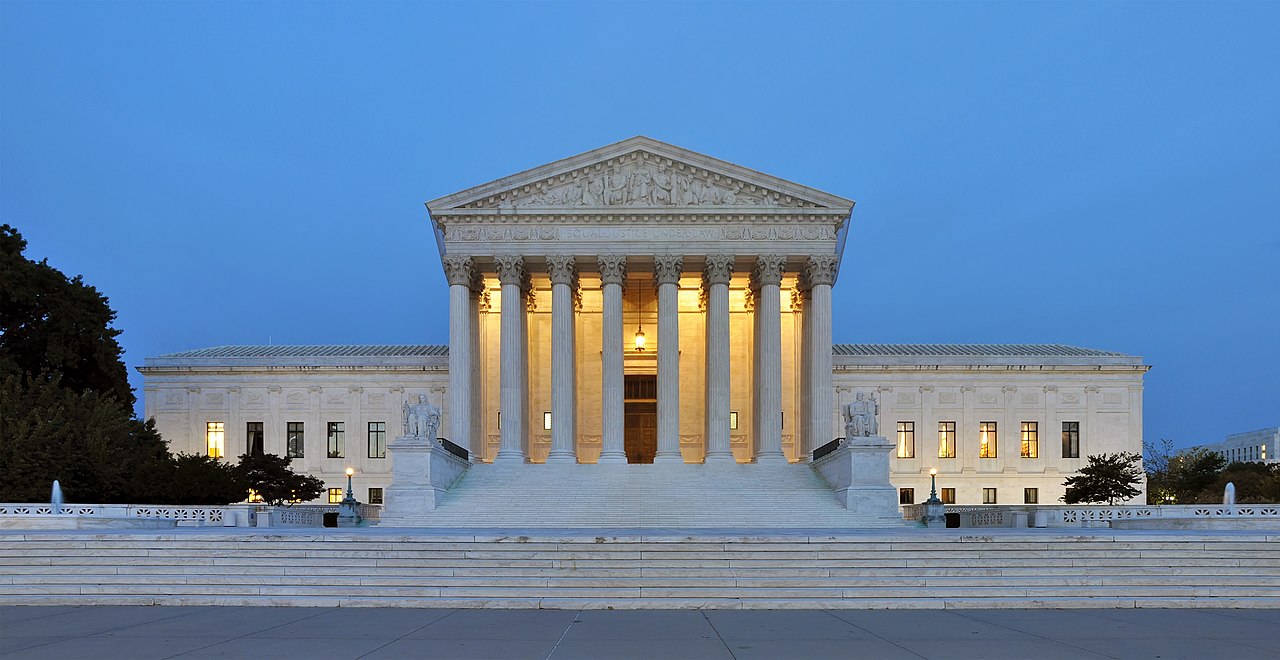
Here is the absurd reality of American election law right now: if you live in Maine, you have a federal right to scrutinize your state’s voter rolls and hold election officials accountable for keeping them clean. If you live in California, Hawaii, or Michigan, you don’t. Same federal law. Completely opposite results. And the Supreme Court is the only institution with the authority and the reach to resolve the contradiction.
The case is PILF v. Nago, out of Hawaii — and it couldn’t be arriving at a more critical moment.
The National Voter Registration Act of 1993, commonly called Motor Voter, was supposed to do two things: protect legitimate registrants from arbitrary removal, and give the public meaningful tools to verify that states were doing their jobs. The law explicitly requires states to maintain accurate voter rolls and make the relevant records available for public inspection. Congress wrote it in plain language. What Congress apparently couldn’t anticipate was a federal judiciary that would interpret the same plain language in diametrically opposite ways depending on which circuit you happen to live in.
The Public Interest Legal Foundation — the organization Christian Adams runs — won a landmark case in the First Circuit establishing that Maine’s voter rolls must be transparent and available for public scrutiny. Maine Secretary of State Sheena Bellows had been hiding the rolls, concealing mistakes, duplicates, and dead voters from public view. The court said no. Maine then passed a law criminalizing discussion of problems found on voter rolls and targeted PILF by name. The court fixed that too.
Then came Michigan. The Sixth Circuit — covering Michigan, Ohio, Tennessee, and Kentucky — ruled that Motor Voter is essentially toothless: as long as a state makes some effort to maintain rolls, it satisfies the law regardless of how sloppy the results actually are. The court also gutted the standing of anyone who wants to challenge sloppy maintenance. In those states, if you find a mess on the voter rolls, too bad — you can’t do anything about it.
Hawaii went further still. When PILF requested election records under the explicit text of Motor Voter — the text that identifies the state as the ultimate repository of election records — the lower court said PILF should have sued individual counties first. The Ninth Circuit reversed on standing but then ruled that voter rolls aren’t even records that Motor Voter requires to be disclosed.
This is the split the Supreme Court now has the opportunity to resolve. And the stakes extend well beyond any single state or case. Trump’s Thursday night address revealed 270,000 noncitizens illegally registered to vote — but that number comes only from states that cooperated with the federal request for data. Blue states are refusing to hand over their rolls. The Motor Voter transparency framework is supposed to prevent exactly this kind of stonewalling.
The Founders designed a decentralized election system for good reasons. But decentralization was never supposed to mean that Americans in some states have legal tools to ensure election integrity while Americans in other states are left completely in the dark.
The Supreme Court needs to fix this.