A newly declassified 538-page Pentagon contractor report reveals that a private company once drew up detailed blueprints for a secret underground bunker in Nevada, designed to store recovered hardware and biological samples connected to UFO sightings. The plans, released as part of the Trump administration’s latest batch of UAP records, show how far a $22 million Pentagon program actually went.
The proposed bunker was to be buried 15 to 20 feet underground at Bigelow Aerospace’s North Las Vegas complex, behind 3-foot-thick reinforced concrete walls, a steel vault door, and a heavily guarded access tunnel. The 5,000-square-foot subterranean structure was meant to store what the contractor called acquired “exotic material or tissue,” including items tied to unidentified anomalous phenomena, the Pentagon’s official term for UFOs and unexplained sightings in air, space, or sea.
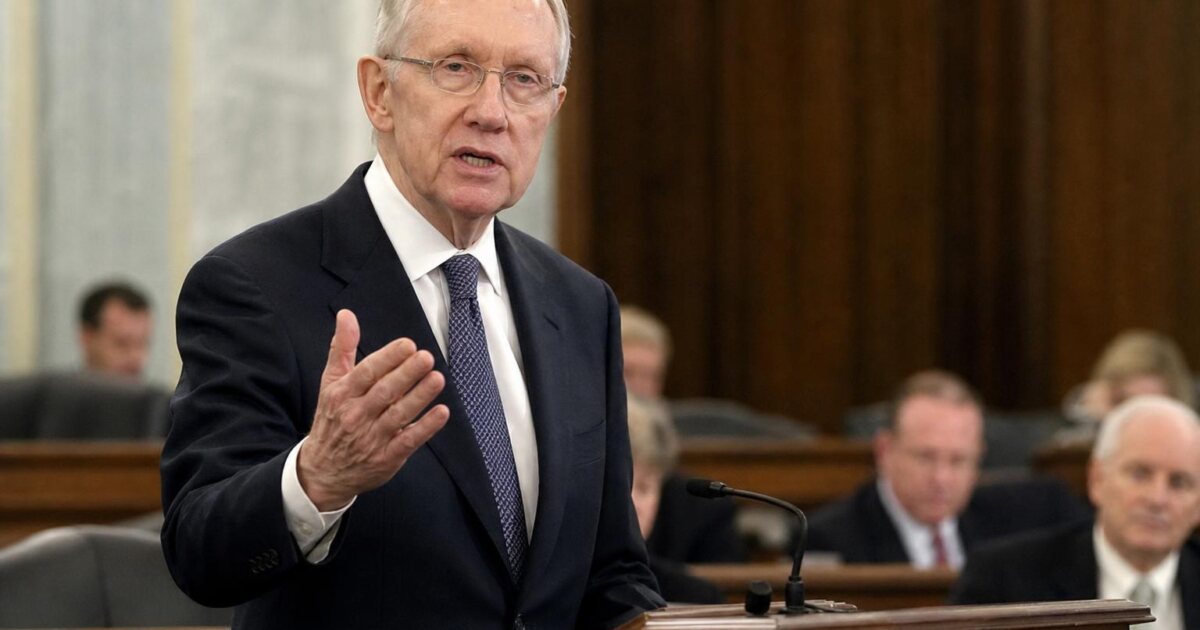
The program behind the blueprint was the Advanced Aerospace Weapon System Applications Program, also known in Pentagon correspondence as the Advanced Aerospace Threat Identification Program. It was launched in 2008 through a $10 million congressional earmark pushed by then-Senate Majority Leader Harry Reid and the late Sen. Daniel Inouye. Publicly, the effort was framed as a study of foreign aerospace threats projected 40 years into the future.
Only one company bid on the DIA contract when it was solicited in August 2008: North Las Vegas-based Bigelow Aerospace Advanced Space Studies, known as BAASS, founded by Robert Bigelow, a longtime supporter of Reid. The DIA awarded the contract the following month. The firm quickly converted a building on South Polaris Avenue in Las Vegas into a fortified compound, complete with soundproofed offices, security cameras, electronic deadbolts, and an 8-foot perimeter fence, with all company names stripped from the exterior.

According to the Pentagon UFO program contractor report, BAASS’s July 2009 report stated plainly that “the need for a highly secure underground vault operated by BAASS became apparent in line with a BAASS priority to pursue and acquire recovered hardware and biological samples from the corporate world and/or from private individuals and groups located elsewhere, including Brazil.” Plans called for multiple security doors along a concrete access tunnel leading into the buried structure, with any above-ground components “extensively camouflaged.”
A Pentagon contractor drew up plans to bury a 5,000-square-foot vault beneath the desert to store recovered UFO hardware and biological samples, and the blueprints are now public.
https://t.co/EYoDfKlI1Z https://t.co/HSy6CcUtcM
— Fox News US (@FoxUSNews) November 26, 2026
Reid pressed hard to shield the program. On June 24, 2009, he wrote directly to Deputy Defense Secretary William Lynn III, warning that investigators had found “several highly sensitive, unconventional aerospace-related findings” requiring “extraordinary protection.” He proposed placing portions of the program inside a Restricted Special Access Program with a strict 14-person access list that included himself, Inouye, Lynn, and a handful of government, military, and BAASS personnel.
DIA leadership was not persuaded. In a November 13, 2009, memo, DIA Deputy Director Letitia A. Long formally rejected Reid’s secrecy request, writing that all program documents delivered during the first year were unclassified because the contractor had no secure facility and employees were still being vetted for clearances. Long added that federal regulations bar the DIA from classifying basic scientific research unless it clearly relates to national security, and that the agency was “unaware of any report containing information sufficiently sensitive and vulnerable to require extra protection.”
DIA Director Lt. Gen. Ronald L. Burgess Jr. and Lynn met with Reid in person later that month, telling him the contractor’s reports were of “limited value to DIA” and recommending the project be moved out of the intelligence agency. Congress added another $12 million for fiscal year 2010, bringing total funding to $22 million, but the DIA did not renew the contract after its second year. Alongside this paper trail, the Pentagon’s eighth UAP records release under the PURSUE directive also included three newly declassified sensor videos recorded from U.S. military platforms in 2020, 2023, and 2026, showing sensors tracking unidentified objects, including one 54-second clip in which a sensor tracks two separate objects before intermittently losing contact. Pentagon officials noted the video descriptions do not reflect analytical conclusions about the objects. Fox News Digital reached out to the Pentagon and AARO for comment. Share your thoughts on the Pentagon UFO bunker plans in the comments below or on social media.