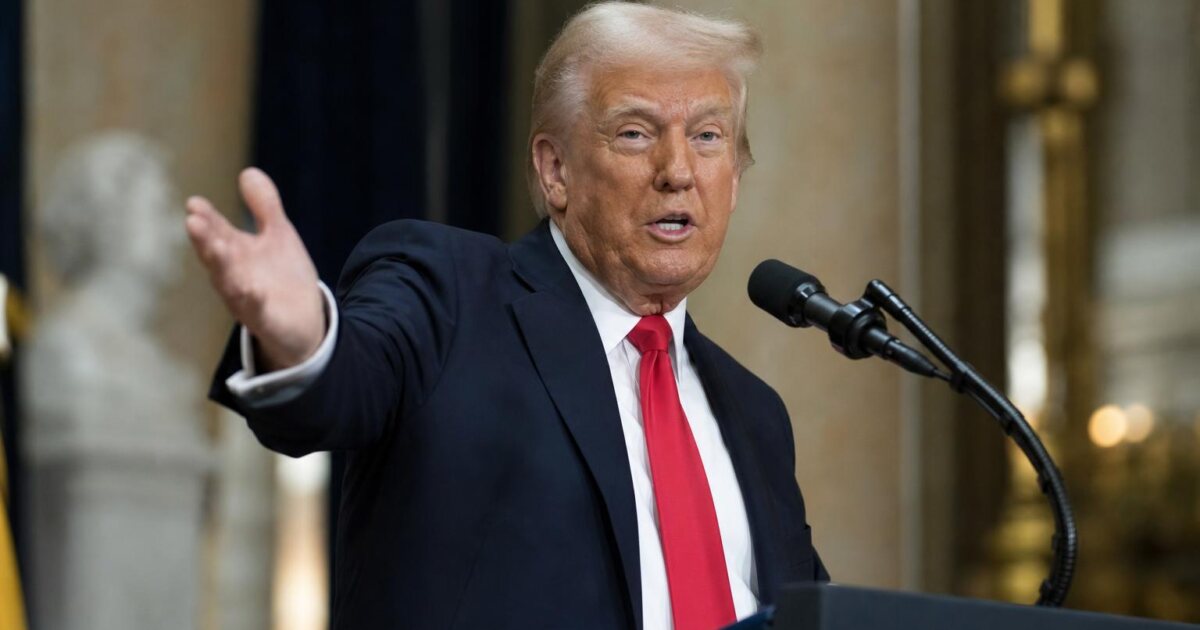
The U.S. economy expanded at a stronger-than-expected pace over the summer, handing President Donald Trump positive economic news just days before the midterm elections.
Real gross domestic product increased at a 3.4% annualized rate during the third quarter, according to the Commerce Department’s advance estimate released Thursday. That marked a significant acceleration from the 2.2% growth recorded during the second quarter and represented the fastest economic expansion in a year, all under the economic policies of President Trump and Republicans.
Economists surveyed by Reuters had expected growth of 3.2%, meaning the July-through-September performance exceeded forecasts despite continued concerns about inflation and borrowing costs. The report is particularly notable politically because it represents the final major GDP reading before voters decide control of Congress in Tuesday’s midterm elections.
Consumer spending remained a major engine of growth, increasing at a 3.8% annualized rate during the quarter and matching its pace from the previous three months. Spending was especially strong in services, including healthcare, restaurants, bars, hotels and motels, while purchases of some goods, including vehicles and household furniture, declined.

Business investment provided another substantial boost as companies continued pouring money into artificial intelligence, computers, software and other technology. Equipment investment surged at a 20.9% annualized rate, its strongest performance since 2020, and contributed more than one percentage point to overall economic growth.
Information-processing equipment, particularly computers and related technology, accounted for much of that increase as businesses continued building infrastructure needed for the expanding artificial-intelligence industry. Investment in intellectual-property products, including software and research and development, increased at an 8.4% rate during the quarter.
A closely watched measure of underlying economic strength delivered an even stronger result than the headline GDP figure. Real final sales to private domestic purchasers, which measures consumer spending and private fixed investment while excluding more volatile components, climbed at a 4.9% annualized rate.
That was up from 4.6% during the second quarter and represented the strongest increase in the measure since the second quarter of 2021. Government spending also contributed to growth, increasing at a 5.3% annualized pace as both defense and nondefense federal expenditures rebounded.
Inventories provided another major contribution after businesses had drawn them down for five consecutive quarters, adding approximately 1.6 percentage points to third-quarter growth. Those gains were strong enough to overcome a substantial drag from imports, which surged as American businesses purchased large quantities of foreign-made equipment and semiconductors.
Imports increased at a 19.7% annualized rate and subtracted roughly 2.6 percentage points from GDP because imported products are deducted when calculating domestic economic output. The Commerce Department said the acceleration from the second quarter primarily reflected stronger investment and increased government spending, partially offset by weaker exports and rising imports.
The inflation picture also improved considerably on a quarterly basis, although separate September figures showed that price pressures remain an important economic challenge. The personal consumption expenditures price index increased at a 2.1% annualized rate during the third quarter, sharply below the 5% pace recorded during the second quarter.
Core PCE inflation, which excludes volatile food and energy prices, slowed to a 2.5% annualized rate from 3.3% during the previous quarter. However, September figures showed annual PCE inflation running at 3.6%, still substantially above the Federal Reserve’s 2% target and complicating the otherwise strong growth report.
For Trump and congressional Republicans, the timing gives them a favorable headline entering the final days of campaigning: 3.4% economic growth, accelerating private-sector demand and continued heavy business investment immediately before voters head to the polls.