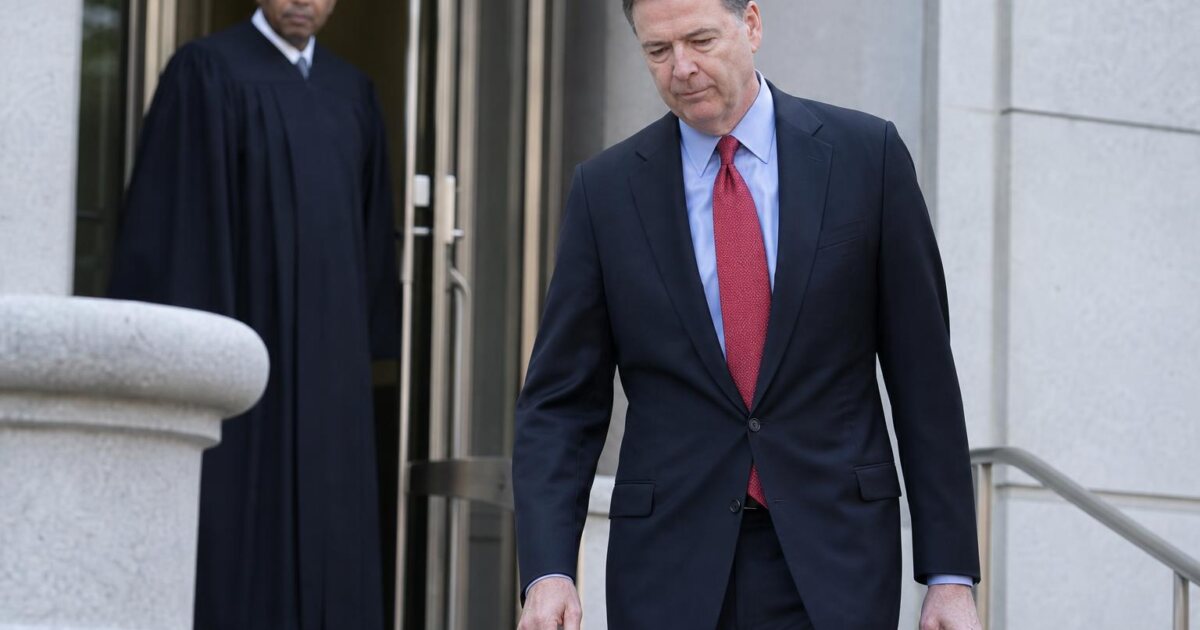
Former FBI Director James Comey is now facing federal charges under the Espionage Act for allegedly directing a classified leak to the New York Times back in October 2016, when he was still running the FBI. Yes, the same guy who spent years presenting himself as the noble guardian of truth and justice apparently had a habit of sharing national defense information with reporters.
The two-count criminal case was filed under seal on October 5 and unsealed Monday by U.S. District Judge Trevor McFadden in Washington, D.C., at Comey’s own request. Prosecutors allege Comey directed staff to pass along information that ended up in an October 5, 2016, New York Times article about Yahoo’s cooperation with U.S. intelligence surveillance, and that the details in that article were substantially similar to classified material circulated internally just hours before publication. He’s charged with both unlawfully transmitting national defense information and conspiring with others to do so.
Comey denies any wrongdoing, which is exactly what you’d expect from a guy who once wrote a book called “A Higher Loyalty.” His attorneys also note that the alleged leak was investigated twice before, in 2018 and again in 2020, without charges ever being filed. Now, James Comey Espionage Act case has resurfaced with a new wrinkle that could sink it before it really gets going.
Here’s the catch. Federal law generally gives prosecutors five years to file charges, but Congress carved out a ten-year window for certain national security offenses, including the ones alleged here. The DOJ filed on October 5, 2026, exactly ten years after the alleged leak. So they made it, right? Well, maybe not.

Comey’s lawyers are pointing to a very specific problem. The ten-year statute of limitations extension refers to an indictment, which requires grand jury approval. But what the DOJ actually filed is a criminal information, a charging document that skips the grand jury entirely. His defense team argues that Congress gave prosecutors a decade to get an indictment, not just to file paperwork on their own. That’s the kind of distinction that could make the whole case disappear on a technicality.
The DOJ, naturally, disagrees. It argues the ten-year deadline applies regardless of which charging document is used first, and also that Comey’s challenge is premature since prosecutors hadn’t yet sought an indictment. Court filings show prosecutors were preparing to go to a grand jury on October 9, but agreed to hold off while the dismissal challenge plays out. So the indictment door isn’t necessarily closed, it’s just temporarily stuck.
Judge McFadden hasn’t ruled on the dismissal question yet. His Monday order only addressed whether the case should stay sealed. In explaining his decision to make it public, he noted that both Comey’s alleged conduct and the government’s prosecution deserve scrutiny. Hard to argue with that.
The whole case could now turn on how one judge interprets a single word in a statute written more than 75 years ago. For a man who spent his career deciding which laws applied to whom, Comey is finding out that the calendar is a tougher opponent than a congressional hearing. Stay tuned.