President Donald Trump announced Friday that he has struck a deal with Russian President Vladimir Putin to import millions of tons of Russian diesel into the United States, a direct reversal of years of American policy toward Moscow and a clear play to knock down sky-high fuel prices before the November midterm elections.
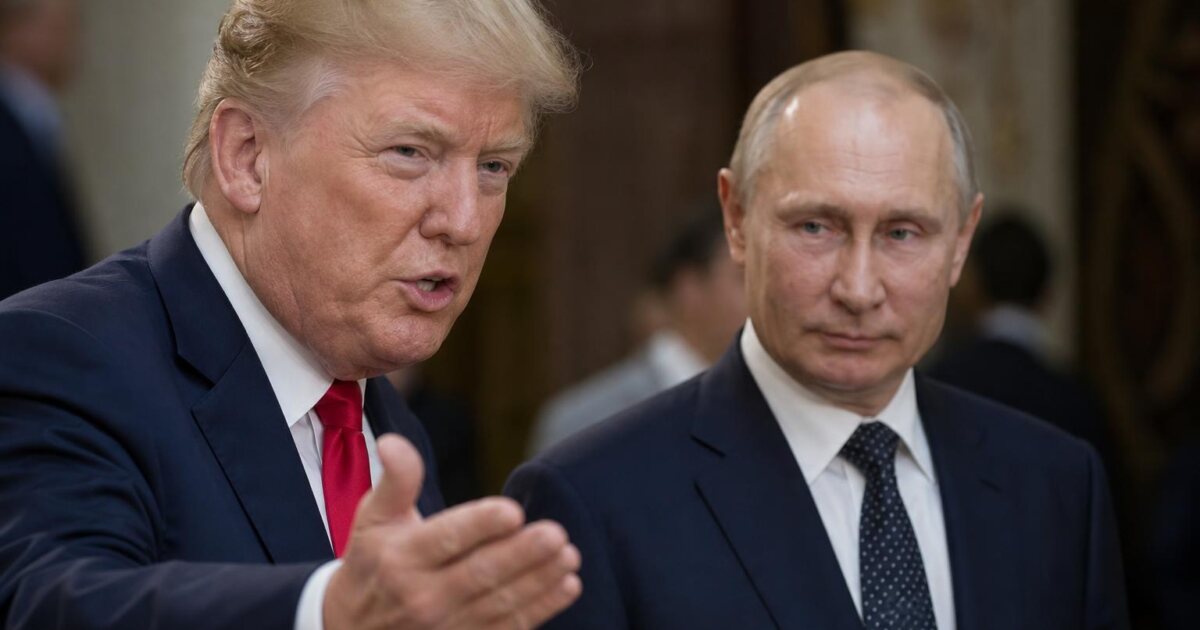
Trump said he hammered out the agreement during a phone call with Putin that was originally supposed to be about a suspected plague outbreak in Russia. Somewhere between “how’s the bubonic plague going” and goodbye, the two leaders apparently also sorted out a global energy deal. Trump announced on social media that Russia will immediately supply more than 300,000 tons of diesel, followed by 500,000 tons in November, then 1 million tons “immediately thereafter,” with an additional 3 million tons coming “within a short period of time” after that.
The timing is a little awkward, to put it gently. Trump signed a sweeping Russia sanctions law just last month designed to squeeze Moscow’s energy revenues and punish it for the ongoing war in Ukraine. That law also directed his administration to slap tariffs of up to 100 percent on the top five importers of Russian oil and gas. The White House did not address any of that in its announcement. Trump kept it simple: “Lower prices for Americans, especially our Great Farmers, Ranchers, and Truckers, is my Greatest Priority.”
The national average for a gallon of diesel sits at $6.28, according to AAA, after hitting a record $6.52 on September 22. Global gas prices have surged as the war in Iran has rattled energy markets. Diesel futures dipped on the news Friday, though analysts are not exactly popping champagne. Michael Lynch of the Energy Policy Research Foundation put it bluntly: “It’s kind of shuffling deck chairs on the Titanic.” He explained that if the U.S. gets diesel from Russia, Russia’s existing customers will simply have to shop elsewhere, keeping overall prices roughly where they are.
Shortly after Trump’s announcement, the Treasury Department issued a temporary general license allowing Russian diesel to reach global markets, with U.S. sanctions suspended on deliveries loaded onto tankers as of Friday through April 2027. That is the first such license to ease diesel sanctions for longer than the standard 30-day window since Russia invaded Ukraine. Russia itself had banned diesel exports since July after Ukraine’s repeated attacks on Russian oil refineries caused domestic output to drop roughly 30 percent, according to the International Energy Agency. Russian Deputy Prime Minister Alexander Novak said Moscow is “immediately starting to lift restrictions on diesel exports ahead of schedule” and that supplies to the U.S. could begin in October.
You can follow the full details of the arrangement through Trump’s Russian diesel deal as new information emerges on pricing, delivery timelines, and sanctions implications.
Ukrainian President Volodymyr Zelenskyy was not exactly thrilled. He called it “a weak decision, unfortunately, a weak decision by strong partners” and said Russia would repay the gesture “with further terror and perfidy.” He added: “I believe our team is simply being used as a smokescreen. And that is certainly not fair.” This is particularly awkward because Trump’s envoy Steve Witkoff and son-in-law Jared Kushner were literally meeting with Ukrainian officials in Miami at the same moment Trump dropped the announcement. Nothing says “trusted partner” like cutting a fuel deal with the other guy while your negotiators are still in the room.
Rep. Don Beyer, the senior House Democrat on the Joint Economic Committee, called the announcement “infuriating” and said on X: “This is what we warned anyone who would listen: Trump isn’t the slightest bit trustworthy when it comes to Russia.” A Kremlin statement said Putin and Trump discussed Ukraine, Iran, and bilateral relations, with Putin expressing confidence the deal “will have a positive impact on the entire global economy.” The two leaders agreed to continue contacts, per the statement. What happens next is whether Congress tries to force the administration’s hand on the sanctions law it just passed, and whether diesel prices actually budge before Election Day on November 3. Drop your thoughts in the comments or on social media, because this one is going to be debated for a while.