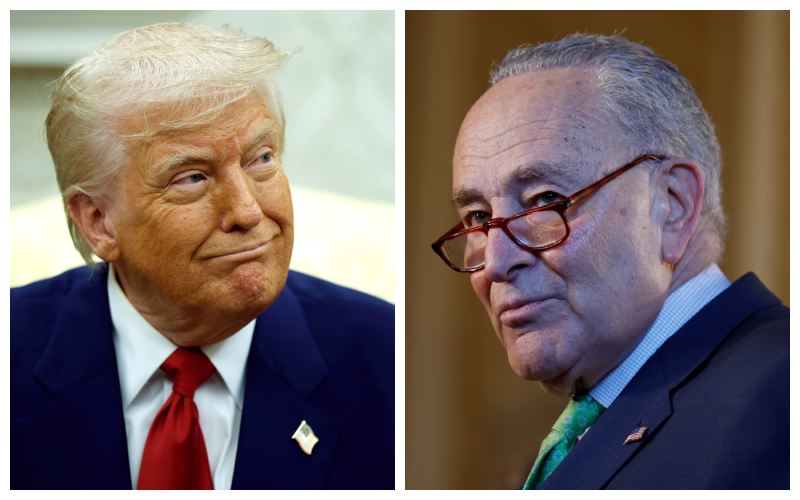
Sen. Chuck Schumer (D-N.Y.) spent Wednesday wielding the minority’s favorite instrument. He blocked the Ratepayer Protection Act, a bill on electricity costs that had sailed through the House with oodles of Democrat support. He blocked the measure pairing a congressional stock trading ban with voter ID. Two bills the public overwhelmingly supports, gone by dinnertime.
Then Wednesday night, Democratic Sens. Jeff Merkley and Patty Murray went to the floor and asked for unanimous consent on a bill to restore the $810 million President Trump canceled by pocket rescission and to bar him from using the tactic again. GOP Sen. Ron Johnson said no. That was the entire proceeding. One senator, one objection, and the thing was finished.
The lesson Schumer keeps declining to learn is that the Senate’s blocking tools are not his alone. They belong to every member, which means the strategy of obstruct-and-message works only when your side is the one being asked for consent. The moment Democrats needed something — floor time, unanimous consent, cooperation — a single Wisconsin Republican applied the same tactic Schumer had been using all day, and the clock did the rest.
And the clock was the whole game. The money expired at midnight on the last day of the fiscal year. The House had already adjourned until after the midterms. There was no path to move a bill through both chambers and onto the president’s desk in a matter of hours, which Merkley and Murray surely knew when they tried the shortcut. Johnson didn’t need to defeat the bill. He only needed to make it take longer than it had.

Johnson, who chairs the Budget Committee, didn’t dress up his reasoning. He said he backs the president doing whatever it takes to reduce federal spending and that he wishes the number had been considerably larger. Hard to argue. The $810 million went to refugee assistance, migrant ‘education,’ and ‘diversity programming’ — all things that a) are not popular with most Americans; and b) made unnecessary after Trump shut down Biden’s open borders. Also, Trump was relying on a provision of law Congress passed years ago – the Impoundment Control Act, which the Office of Management and Budget has said he has the authority to utilize.
Merkley called the maneuver a line-item veto taking a wrecking ball to the Founders’ design, which is fair but then there’s the law. It’s a serious constitutional argument and worth having — on a timeline that allows for a hearing, a markup, and a vote, which is exactly what the sponsors chose not to pursue. They reached for unanimous consent instead, because the alternative was admitting they lacked the votes and the calendar both.
So those keeping score, the ledger for Schumer’s week reads: two popular bills killed, one unanimous-consent request killed, $810 million in cuts standing, and five weeks until an election in which his party is running on affordability and accountability. What a joke.