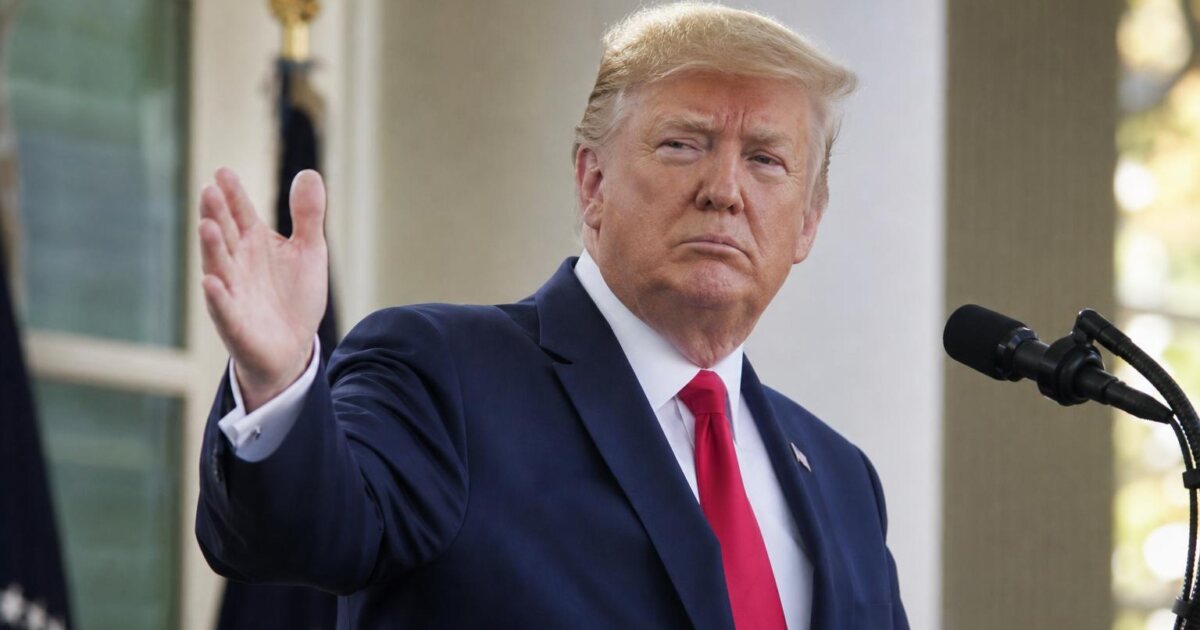
President Trump canceled almost $1 billion in federal funding Friday, using a controversial budget maneuver known as a pocket rescission that allowed him to bypass congressional approval. The move targeted a broad range of programs, from immigration services to diversity initiatives.
The bulk of the cancellations, totaling $810 million, hit Health and Human Services programs serving undocumented immigrants and unaccompanied children, as well as similar efforts under the agency’s Minority Health office and the Department of Education’s Special Programs for Migrant Students.
White House Cites Border Success as Justification
The White House framed the cuts as a natural consequence of what it described as a dramatic decline in illegal border crossings. “These funds previously went to pro-illegal immigration programs and Non-Governmental Organizations that provided services to refugees, asylees, and other non-citizens and put unaccompanied children in harm’s way,” the administration said in a press release.
The statement added, “Thanks to President Trump’s successful border policies, the illegal alien invasion is over and there are fewer people crossing our border than ever before.” The White House argued that reduced border activity made the existing funding levels excessive, justifying their cancellation. According to Trump pocket rescission funding cuts, additional cuts aligned with Trump’s anti-DEI agenda, rescinding funds for gender-affirming care research, minority business development, and the Justice Department’s Community Relations Services, which the White House called “wasteful and harmful.”
How the Pocket Rescission Process Works
A pocket rescission occurs when a president requests that Congress cancel funds so close to the end of the fiscal year that the money expires before lawmakers can act on the request. The U.S. Government Accountability Office defines the maneuver as one that effectively lets the executive branch sidestep the normal congressional review process.
Under the Impoundment Control Act, the administration can withhold funding for up to 45 days while Congress considers a rescission request. If Congress does not approve, the funds must be released. Trump used a similar approach in 2025 to unilaterally cut roughly $5 billion in congressionally approved spending, and the Supreme Court allowed those cuts to stand, ruling that the administration could keep money that was set to expire the following week.
What Comes Next for the Canceled Programs
With the fiscal year ending imminently, affected agencies and advocacy groups face little practical recourse to restore the canceled funding before it expires. Organizations that relied on HHS grants to serve unaccompanied minors and refugee populations will need to identify alternative sources of support quickly.
Congressional Democrats are expected to push back on the pocket rescission strategy, arguing it undermines the legislature’s constitutional power of the purse. Whether lawmakers pursue legal or legislative challenges will likely shape how aggressively the administration uses the same mechanism in future budget cycles.