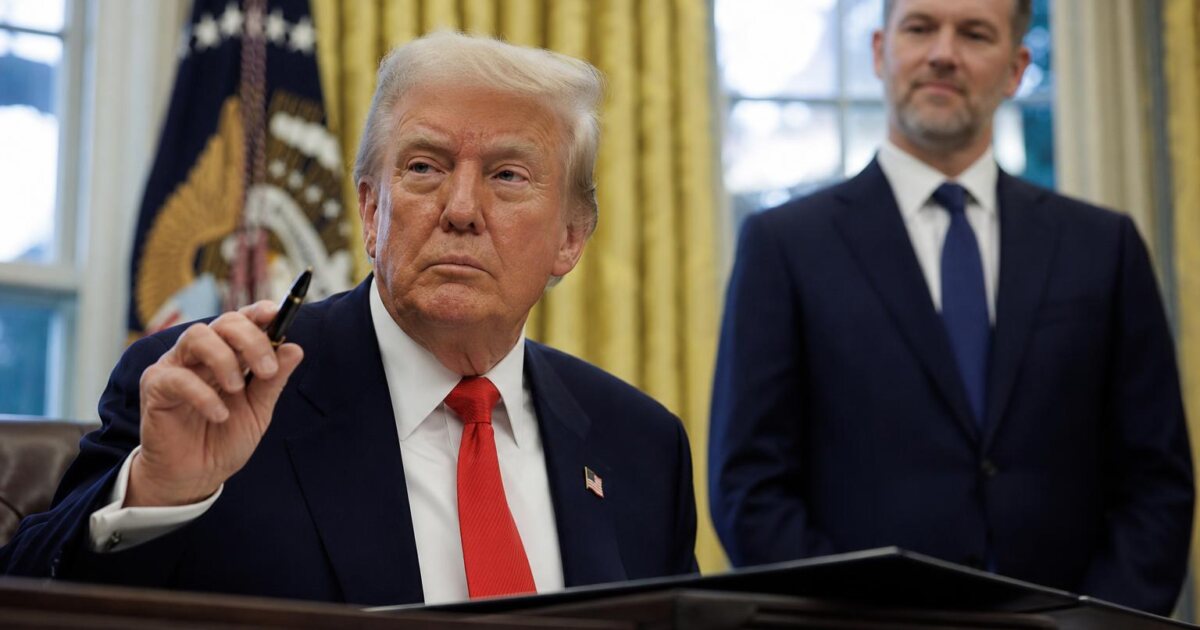
President Donald Trump signed a memorandum on Sept. 16 directing the removal of Canadian-origin goods from the U.S. federal civil procurement system, the latest move in a rapidly escalating trade conflict between Washington and Ottawa.
The memo authorizes the director of the Office of Management and Budget, the United States Trade Representative, and the Federal Acquisition Regulatory Council to “identify and take all steps toward removing or otherwise making non-available for purchase Canadian-origin items in the federal civil procurement system.” It also tasks U.S. Trade Representative Jamieson Greer with monitoring “Canada’s continued treatment of U.S. origin goods in Canadian government procurement.”
A Follow-Up to the GSA Directive
The Sept. 16 memo builds on a directive Trump issued on Sept. 8, ordering the General Services Administration to strip Canadian-origin products from its Multiple Award Schedules, a government-wide contracting program that handles more than $50 billion in federal purchasing annually. That program gives federal agencies access to millions of commercial products and services from approved vendors.
Trump was pointed in explaining his reasoning after issuing the GSA directive. Everyone knows that Canada doesn’t let our Great Dairy Farmers sell into the Canadian Market, and that the only reason Canada makes Autos is because of previous disastrous Trade Agreements while other Presidents were in Office,” he wrote on social media. He also accused Canadian federal and provincial governments of having “banned American Small Businesses and Companies from selling into their Government Procurement Markets.”
Canada’s Counter-Tariffs and Buy-Canadian Push
Canada responded to U.S. pressure on Sept. 8 by imposing counter-tariffs covering roughly $20 billion in American imports, with rates of 15, 25, and 50 percent applied to goods including steel and aluminum, dairy products, appliances, agricultural equipment, pulp and paper, plastics, and electronics. Those measures came in direct response to U.S. tariffs of 50 percent on a comparable value of Canadian exports, imposed under Section 338 of the Tariff Act of 1930 and effective Aug. 22.
Ottawa has also launched a broader “Buy Canadian” policy, and all provinces except Alberta have moved to restrict, prohibit, or impose tariffs on U.S. alcoholic beverages. Most provinces have additionally enacted measures to favor Canadian suppliers in their own government contracting. For more details on the scope of the new U.S. order, see Trump’s Canadian goods procurement memo.
What Comes Next in the Trade Dispute
With both governments now restricting each other’s access to public procurement markets and trading tariff measures, the dispute shows no sign of immediate resolution. Greer’s monitoring role under the new memo suggests the administration is laying groundwork for further action if Canada does not change course on how it treats American goods in its own procurement system.
Businesses on both sides of the border that rely on cross-border government contracts face mounting uncertainty as the two countries move further from the integrated trade relationship that has defined North American commerce for decades.