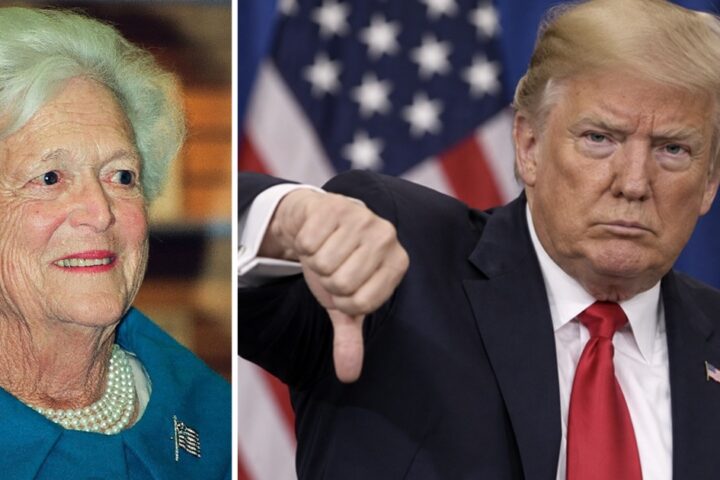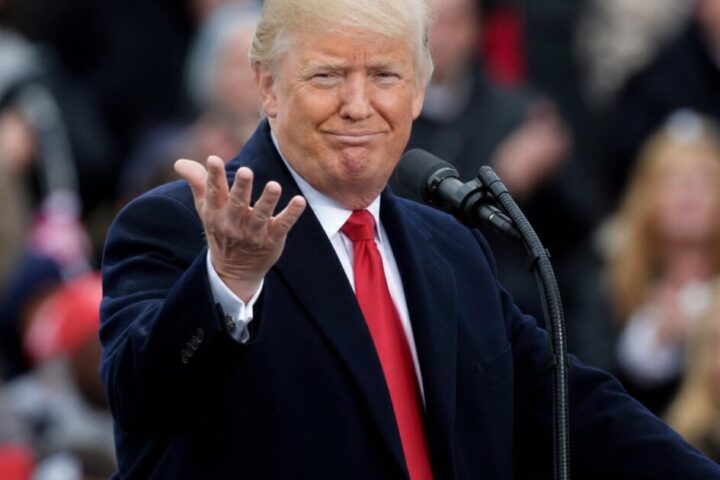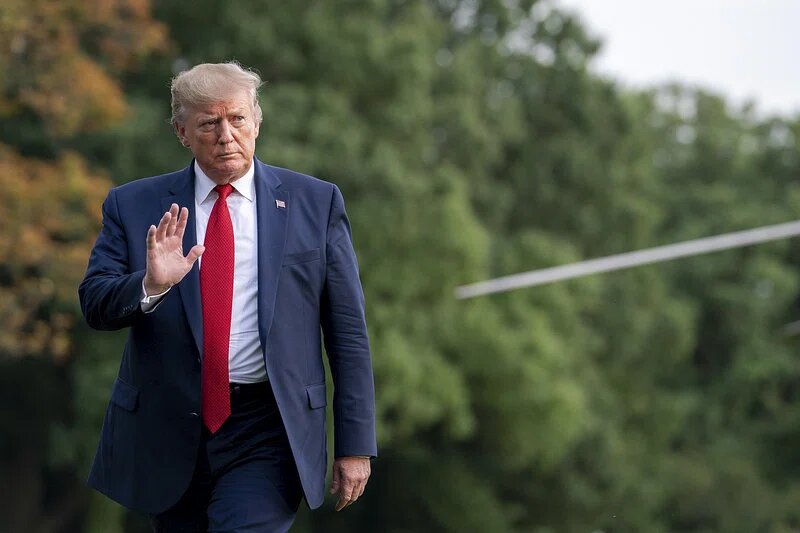
President Trump has labeled “wokeness” one of the most lethal cancers on our society and he’s right. He’s also working tirelessly to excise that cancer from our institutions, and he scored a direct hit this week.
Lonnie Bunch III, the head of the Smithsonian for the past seven years, announced Tuesday that he’ll retire at the end of the year. He also insisted, to the Washington Post, that the Trump administration’s pressure campaign against the institution had nothing to do with it — that he remains “ready to do battle” for the Smithsonian’s independence. A man can say that. But when the departure arrives in the middle of the most sustained White House offensive against an institution in living memory, the disclaimer is doing more work than it can bear.
Give Bunch his due first, because the honest version is stronger than the dunk. He is a serious historian who founded the National Museum of African American History and Culture and became the Smithsonian’s first Black secretary — a genuine professional accomplishment, not a partisan one. And his stated reason for leaving is human enough: he told the Post the job has been “stressful,” and that he’d like to wake up and not immediately reach for his phone. Seven years is a long tenure. People leave big jobs for ordinary reasons.
“I have to be honest, it has been stressful,” he said. “And at a certain point, I’d like to wake up in the morning and not look at my cellphone.” https://t.co/nBXmeGGDB5
— Nolan D. McCaskill (@NolanDMcCaskill) September 8, 2026

But the context is the context. In March 2025, Trump signed an executive order titled “Restoring Truth and Sanity to American History,” premised on the idea that the capital’s museums should be places to learn rather than to absorb a single ideological narrative. That summer the White House ordered a comprehensive review of the Smithsonian ahead of the America 250 celebrations, and on July 4 its Domestic Policy Council released a 162-page report documenting what it called ideological capture at the National Museum of American History. The critique didn’t come only from the right; actual historians and black conservatives publicly faulted the museum’s framing of American history as activist rather than scholarly. A congressional hearing followed. The pressure was real, sustained, and escalating.
“I have to be honest, it has been stressful,” he said. “And at a certain point, I’d like to wake up in the morning and not look at my cellphone.” https://t.co/nBXmeGGDB5
— Nolan D. McCaskill (@NolanDMcCaskill) September 8, 2026
Set a retirement announcement against that backdrop and “it had nothing to do with the administration” becomes a claim you’re entitled to doubt. Not because Bunch is lying outright — stress and White House pressure are not mutually exclusive; the second can produce the first — but because the two are obviously entangled. A leader spends a year absorbing an organized campaign to reshape his institution, calls the job exhausting, and steps down. The pressure didn’t have to be the sole cause to be a cause.
What matters more than Bunch’s motives is what comes next, and here the mechanics favor the administration. Trump can’t appoint the next secretary; that power belongs to the 17-member Board of Regents. But Vice President Vance sits on that board, which currently has two vacancies to fill. The lever exists, and it’s being watched.
The institutional direction is no longer in doubt. The chief who steered the old course is leaving, and the people who wanted a new one are holding the board seats.