Virginia lost in federal court on Monday, and the way it lost is worth more than the fact of it. Judge Robert Payne didn’t strike down the Commonwealth’s new anti-ICE law. He drew a line straight through the middle of it, and the line marks exactly where legitimate state authority stops.
The statute, Va. Code §15.2-1726.1, went after the 287(g) program — the section of the Immigration and Nationality Act that lets ICE train local officers to perform immigration-enforcement functions under federal supervision. Several Virginia localities had already signed on. The new law would have forced them to walk it back. DOJ sued and asked for a preliminary injunction, and Payne granted it in part, finding the government likely to win on two theories.
The first is the Contracts Clause — a provision that spends most of its life gathering dust. States may not pass laws that substantially impair existing contractual obligations without a real and reasonable justification. Payne found that Virginia’s law does exactly that to agreements already in force between its localities and the federal government, and that the Commonwealth hadn’t offered a public purpose weighty enough to excuse it. The oldest structural limits in the Constitution, it turns out, still work.
The second is intergovernmental immunity under the Supremacy Clause. Payne found the statute directly regulates how federal officers enforce federal immigration law. A state has enormous authority over its own governments and its own employees. It has none over how federal agents do a federal job. The injunction bars Virginia from enforcing the law against federal officers, employees, or agencies, full stop.
Now the part that stings a bit. Payne left half the law standing. Localities that never entered a 287(g) agreement are still forbidden to enter one — Virginia’s forward-looking policy survives intact. He called it preserving the status quo while the case proceeds, with a fuller opinion to come.
That split is the whole story, and it’s the right result. A state really does get to decide whether its subdivisions join a voluntary federal program. Elections have consequences, and a new majority in Richmond can set new policy from here forward. What a state cannot do is reach backward and void commitments its localities already made — because that isn’t a policy choice, it’s an attempt to nullify a contract the state was never a party to. One is federalism. The other is a do-over.
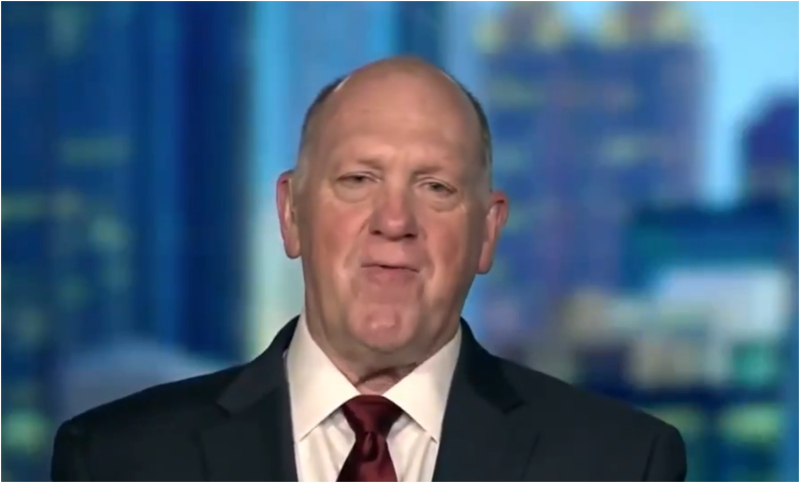
But that said, the overall effort by Democratic Gov. Abigail “Not So Moderate” Spanberger and the state’s Democrat majority to thwart border czar Tom Homan and ICE from rounding up illegal aliens can – and will – proceed apace. No state can block federal immigration enforcement, and that’s gonna sting for Spanberger and her increasingly lawless party.