The Franklin County Municipal Court in Columbus, Ohio issued a rule last week declaring that federal immigration agents cannot make arrests at or near the courthouse unless they have a judicial warrant. This is not a power any local municipal court possesses. The DOJ sued to stop it Monday, and the lawsuit’s language is exactly as unambiguous as the legal situation warrants.
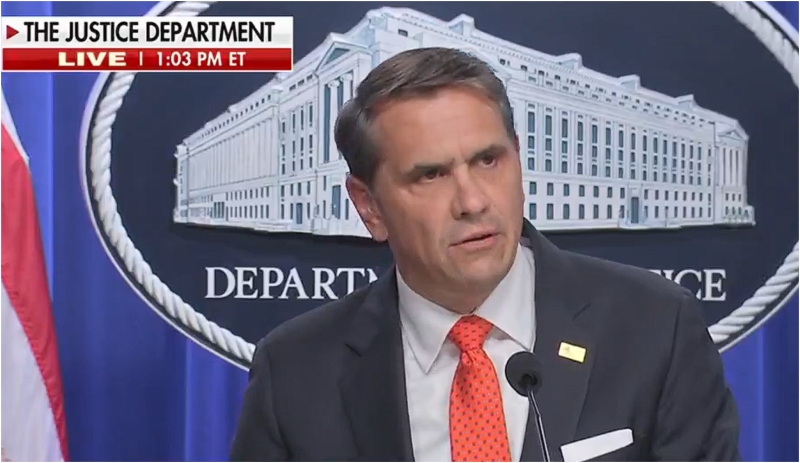
Assistant Attorney General Brett Shumate put it plainly: “This type of rule obstructs federal law enforcement and facilitates evasion of federal law by dangerous criminal aliens, despite Congress’s direction that federal agents detain and remove them. Throughout the country, and including in this courthouse specifically, federal agents have routinely and safely conducted arrests. The Department of Justice is committed to protecting that important federal prerogative.”
The DOJ’s own statement explained the practical reason why courthouses are actually among the safer places to conduct enforcement actions: enhanced security screening is already in place, reducing the risk of flight and the danger to both officers and the public that comes with attempting arrests in less controlled environments. Franklin County’s rule doesn’t just obstruct enforcement — it actively makes enforcement more dangerous by pushing ICE toward riskier operational environments.
As is true in all types of law enforcement, conducting an arrest at or near a courthouse often reduces the risk of flight and potential safety risks to the public, law enforcement officers, and subjects themselves due to the enhanced security screenings in place at courthouses.… pic.twitter.com/9efBs2UgeE
— U.S. Department of Justice (@TheJusticeDept) August 25, 2026
Franklin County, worth noting, has the second-largest Somali population in the United States. The court’s rule is a nakedly political attempt to shield a specific community from federal immigration enforcement — not a neutral administrative policy, but a sanctuary maneuver dressed in judicial language.
The broader pattern deserves to be named directly. Local governments across the country are conducting a coordinated campaign to create enforcement-free zones — sanctuary cities, courthouse protection orders, data-sharing bans, law enforcement non-cooperation requirements — wherever they believe the political constituency favors it. Each individual action is framed as a narrow, local policy decision. The cumulative effect is a patchwork of protected spaces where federal law applies in theory but cannot be enforced in practice.
This is not constitutional federalism. The federal government has plenary authority over immigration enforcement. No local court has the power to declare federal law enforcement jurisdiction nullified within its geographic vicinity. Franklin County Municipal Court doesn’t get to be a sanctuary district any more than Maricopa County got to nullify federal tax law.
The American people voted for mass deportations in 2024. The Trump administration has been executing on that mandate — ICE just arrested more than 1,300 people in Virginia and Maryland alone in a single recent operation. Activists, judges, and Soros-backed prosecutors keep throwing obstacles in the way, and the DOJ keeps suing them.
Franklin County joins New Jersey, California, New York, and a growing list of jurisdictions that have decided defying the federal government is worth the legal fight. The DOJ filed Monday. The answer to that question is coming. Meantime, federal law enforcement should continue in Franklin County. Make that jurisdiction enforce the law by trying to impede federal agents. That should be worth buying a ticket to see.